Why Some Questions Make Widows Feel Defensive or Insecure.
Widows are often asked questions about their grief that carry a hidden undercurrent with them. Here’s why some questions can feel painful—and what widows wish people understood.

Widows, can we talk about something for a minute?
Have you ever been asked a question about your grief and suddenly felt your body tighten?
Maybe your chest pulled inward.
Maybe your mind started racing.
And suddenly you felt defensive.
Or insecure.
Not because your grief is playing out wrong.
But because something about the question made you feel like you needed to protect yourself… or explain yourself.
Later you might find yourself wondering:
Why did that question bother me so much?
Why did I suddenly feel like I had to justify my grief?
If this has happened to you, you’re not imagining it.
And you’re not overly sensitive.
There is actually a reason this happens.
Let’s talk about it.
Sometimes the Question Isn’t Just a Question
Most people who ask widows questions have no intention of saying anything hurtful.
They care.
They’re curious.
They’re trying to understand something they have never walked through themselves.
But our culture quietly carries a lot of beliefs about how grief is supposed to work.
Many people have absorbed the idea that grief should gradually resolve over time. That eventually you should return to the person you were before the loss. That strong faith should make grief easier. That staying busy or focusing on the positive will help someone move on.
That healed grief should look like productivity, activity, and engagement with life again.
Some even believe grief is simply a mindset that can be managed or controlled if someone tries hard enough.
Most people don’t realize those ideas are shaping the questions they ask.
But boy, do widows feel them.
Sometimes before their mind even has words for why.
And suddenly the question doesn’t feel like curiosity anymore.
It can feel like evaluation.
Like someone is quietly measuring your grief.
Widowhood has a way of exposing how little language our culture actually has for loss.
Sometimes what widows feel underneath these questions is a quiet pressure that sounds something like:
Why can’t you just…
Why can’t you just move forward.
Why can’t you just stay positive.
Why can’t you just start living again.
But grief isn’t something we simply “just” our way through.
Why It Can Land So Deeply
When you lose your husband, grief doesn’t just touch your emotions. It reaches into absolutely everything.
Your body.
Your nervous system.
Your brain.
Your identity.
Your routines.
Your sense of safety.
Your place in the world.
Years of shared life created deep attachment.
Your brain wired in his voice, his presence, his rhythms.
Your nervous system learned to regulate alongside his.
Your identity formed around a life built together.
So when a question carries assumptions about how grief should behave, it can feel like something sacred is being questioned:
your love
your loyalty
your healing
your story
It’s no wonder your heart sometimes reacts quickly.
That reaction isn’t because of weakness, or confused thinking.
It’s the echo of attachment and love.
Sometimes what hurts about the question isn’t the actual words themselves.
It’s the measuring stick hidden underneath them.
Questions That Can Hit Widows Hard
Widows hear a lot of questions after loss.
Some are thoughtful and caring.
Others are simply people trying to understand something they’ve never experienced.
But sometimes a question carries an undercurrent — an assumption about how grief is supposed to work.
And when that happens, the question can land harder than the person asking may realize.
“How long has it been now?”
The undercurrent of the question:
Shouldn’t you be further along by now?
The truth widows know:
Love does not follow a calendar, or a timeline, or stages.
Grief may change shape over time, but it doesn’t disappear simply because months or years pass.
“Are you doing better?”
The undercurrent of the question:
Are you progressing the way I think healing should look for you?
The truth widows know:
The loss will never feel good or neutral.
And performing or pretending like it doesn’t bother us anymore can make us feel like we are betraying ourselves.
Some moments feel lighter.
Some moments feel heavy again.
Both can exist at the same time.
Doing better for us is being able to honestly communicate our grief without worrying about how it makes other people feel.
“Have you thought about dating?”
The undercurrent of the question:
Isn’t it time to replace what you lost?
Or to move on so you aren’t so sad?
The truth widows know:
Love and attachment do not simply reset.
There is no replacing the life and person we lost.
A new relationship doesn’t erase the pain or restore the person we were before loss.
Sometimes it feels like people believe the “old us” will return if we have a partner again.
But widowhood changes a life in ways that cannot simply be undone.
“Don’t you want to move on?”
The undercurrent of the question:
Are you stuck in your grief?
Do you like feeling this way?
Why can’t you just…
The truth widows know:
Grief isn’t something you choose to stay in.
It’s something you slowly learn how to live with.
And moving forward and carrying the person you love can happen at the same time.
“Do you still think about him every day?”
The undercurrent of the question:
Shouldn’t the attachment be fading by now? Shouldn’t you be further along?
The truth widows know:
We don’t ever want to forget them. In fact, at times we are afraid we will forget them.
“What would your husband want you to be doing right now?”
or
“How would your husband want you to be handling this now?”
The undercurrent of the question:
Are you honoring him by how you’re grieving?
This question can feel deeply insensitive to the reality we are living in.
Our entire grief experience exists because the person we built life with is gone.
Being asked to consider what they would want from us now can make the conversation shut down almost instantly.
It asks us to consult someone we can no longer turn toward in life.
The truth widows know:
The voice we most wish we could hear is the one we can no longer ask.
Widowhood forces us to learn something we never wanted to learn.
How to make decisions.
How to move through life.
How to think and choose on our own again.
Without the person we used to do life beside
Responses to Keep on Hand
Widows, sometimes the most helpful thing we can do when a question lands heavily is simply slow the conversation down.
Not with anger.
Not with withdrawal.
Just with clarity.
You might say something like:
Would you mind reframing that question a little? Sometimes my grief can color how I hear things, and I want to make sure I understand what you’re really asking.
Before I answer, can I ask what you’re hoping to understand?
Can you tell me a little more about what you’re asking?
That question can carry a lot underneath it. Can you tell me a little more about what you’re wondering?
Help me understand what made you ask that.
These responses don’t shut someone down.
They simply slow the moment down.
And sometimes that small pause is all it takes for the conversation to shift from assumptions to understanding.
One last thing I’d love for you to hear
Widows, many questions people ask about grief are not really questions.
They are beliefs about how grief should behave.
But grief does not follow cultural expectations.
Grief follows love.
And the depth of your grief is not evidence that you are doing something wrong.
It is the exact opposite… evidence that love existed.
Be Well,
Kimber

Understanding Grief After the Loss of a Husband

Many widows experience a complicated emotional and neurological response after the death of a spouse. Grief after losing a husband can affect the brain, nervous system, identity, and daily life in ways that many people do not realize. Researchers studying bereavement and attachment have found that grief can impact memory, concentration, emotional regulation, and the body’s stress response.

Widows often describe feeling misunderstood when others expect them to “move on,” stay positive, or return quickly to their former life. The truth is that grief after losing a spouse is not simply sadness. It is the result of deep attachment, shared life rhythms, and years of emotional co-regulation with a partner.

Because of this, questions about grief can sometimes carry unintended pressure. Many widows report feeling defensive or misunderstood when people ask if they are doing better, when they will move on, or whether they are honoring their spouse through how they grieve.

Learning about the impact of grief on the brain, body, and emotional life can help widows feel less alone and can help friends and family better understand what someone experiencing deep loss is actually going through.

This article explores why certain questions about grief can feel painful to widows and what many widows wish people understood about loss after the death of a spouse.Why grief can feel like a storm and what your body is actually telling you.
Grief often feels overwhelming because it moves through the body in waves. Sudden surges, foggy thinking, and intense emotion are not signs of weakness — they’re the nervous system responding to loss. Understanding what your body is doing can soften fear and help you ride each wave with more trust.

Grief rarely arrives as something gentle.
It comes like weather — sudden, disorienting, and powerful enough to change the landscape of your inner world without asking permission.
One moment you are functioning.
The next, your chest tightens, your breath shortens, your thoughts scatter, and something inside you braces as if danger has entered the room.
This is why grief so often feels like a storm.
Not because you are dramatic.
Not because you are unstable.
But because your body is responding to loss exactly the way it is designed to respond to threat.
A sudden loss creates a pressure shift inside the body
In a physical storm, the air pressure changes before the rain ever falls. The body senses it first.
Grief works the same way.
When someone you love is suddenly absent, your nervous system does not interpret that as “sad news.” It interprets it as a rupture in safety and attachment.
So the body responds:
Heart rate increases
Breathing becomes shallow or tight
Muscles brace
Thinking narrows
Emotions surge quickly and intensely
This is not emotional weakness.
It is the acute stress response activating to protect you.
Your body is trying to survive a world that no longer makes sense.
Grief moves in waves because the body cannot hold everything at once
One of the most confusing parts of grief is how it comes and goes.
You may feel relatively okay one moment — and then suddenly overwhelmed the next. The shift can be fast enough to make you wonder if something is wrong with you.
What’s actually happening is this:
The nervous system cannot stay at peak intensity indefinitely.
When grief surges, the body enters a high-alert state. Stress hormones rise. Attention narrows. Emotion intensifies.
But that state is not sustainable.
So the body does what it is designed to do:
it crests — and then begins to settle.
Within a single day, grief often moves in waves:
rising suddenly
peaking intensely
then easing enough for breath, clarity, or orientation to return
The loss does not disappear.
But the wave passes.
This cycling is not instability.
It is protection.
Crying is often part of the release, not the problem
Many people fear the moment tears arrive.
“If I start crying, I won’t stop.”
“If I let this out, I’ll fall apart.”
But emotional crying is not usually what prolongs a grief wave. In many cases, it signals that the body has reached the crest of the stress response.
Crying activates calming pathways in the nervous system. It can help shift the body out of high alert and toward settling.
The tears do not mean the storm is getting worse.
They often mean pressure is being released.
The fog is not failure — it’s protection
Alongside the waves, many people experience fog.
Thinking feels slow.
Words don’t land.
The world feels distant or unreal.
This fog is not confusion or denial.
When the nervous system is overloaded, clarity is often the first thing to go. Narrowing awareness helps protect the brain from taking in more than it can handle.
As the wave settles, many people notice:
the fog thinning
orientation returning
the ability to engage coming back online
This does not mean the grief is gone.
It means the body found its way back to you again.
What your body is actually saying
When grief feels like a storm, your body is not saying,
“Something is wrong with you.”
It is saying:
This loss matters.
I am trying to keep you safe.
We cannot carry all of this at once.
The waves, the tears, the fog, the sudden quiet — these are not signs of failure.
They are signs of a nervous system working hard to survive love that was torn away.
A sentence to return to when the wind picks up
Grief moves through the body in waves, and while the loss remains, the nervous system is designed to rise, crest, and settle — even when the storm feels overwhelming.
You don’t have to control the storm.
You don’t have to rush the calm.
You could try saying this out loud as a reminder:
“This wave will move.
My body knows how to come back.”
Telling yourself this often will remind your brain and body of these simple truths and help regulate you, and build trust with your process.
I hope this help!
Sending yo uso much love,
Kimber
Coming next in this series
In the next posts, we’ll slow this down and look more closely at what’s happening inside the body — including:
Understanding the body doesn’t take the pain away.
But it does remove the fear — and fear is often what makes grief harder than it already is.

Grief often feels like a storm because it moves through the body in waves. In this post, I explain what happens in the nervous system after the loss of a spouse — including grief surges, emotional fog, crying, and sudden shifts between calm and overwhelm. This grief education is designed specifically for widows who feel confused by their body’s responses and want a science-informed, compassionate understanding of why grief comes and goes. Understanding how grief waves work can reduce fear, normalize physical symptoms of grief, and help widows trust their body during acute grief.
Essential Oils & Practices for Grief Support for Widows | Supporting the body, brain, breath, and heart.
Grief after loss lives in the nervous system, the body, and the breath. This post shares essential oils and embodied practices for widows—supporting sleep, pain, digestion, emotional regulation, journaling, and gratitude as you carry grief forward.

Grief isn’t just emotional…
For widows, it lives in the nervous system, the gut, the immune response, the muscles, memory, and the breath.
Sleep is disrupted.
Pain increases.
Appetite changes.
The body stays on alert.
The mind feels foggy or overwhelmed.
This is not happening because you are weak.
It is grief doing what grief does.
Because grief lives in the body, it helps to have practices that support the body—with honesty. care, patience, and love.
Essential oils work by engaging these systems through scent, skin, and internal pathways, helping the body settle enough to process what the heart is carrying. Paired with embodied practices—breath prayer, writing, stillness, gratitude—they become loving companions in widowhood.
Not to avoid or repress grief.
But to help you stay present while you carry it.
How Oils + Practices Support Grief

Scent communicates directly with the limbic system—the part of the brain connected to emotion, memory, and safety. Writing engages both sides of the brain, allowing emotion and meaning to work together. Breath anchors the nervous system in the present moment.
Together, these practices:
support nervous system regulation
soften chronic stress responses
help integrate memory and emotion
create space for prayerful presence
They don’t erase sorrow.
They hold space for it.
1. Sleep
Settling the nervous system into rest
What it supports
Parasympathetic (rest-and-restore) activation
Reduced nighttime stimulation + alertness
Deeper, more consistent sleep rhythms
Why it works
Certain plant compounds influence GABA activity, limbic calm, and cortisol rhythms—all essential for sleep.
Use
Aromatic
Lavender • Roman Chamomile • Cedarwood (diffuse before bed)
Topical
Lavender + carrier oil on feet, chest, or back of neck
Internal
Lavender in warm tea or honey before sleep
Practice
Breath prayer in bed:
Inhale: “I am safe.”
Exhale: “I can rest.”
2. Waking Up — Uplifting & Hopeful
Gently re-engaging
What it supports
Dopamine and serotonin signaling
Mental clarity and motivation
Emotional release without overstimulation
Why it works
Citrus and herbal oils stimulate alertness centers and mood pathways while supporting oxygen flow to the brain.
Use
Aromatic
Orange • Grapefruit • Rosemary
Topical
Orange + rosemary on wrists or back of neck
Internal
Lemon or orange in warm water on waking
Practice
Open curtains
Speak one hopeful truth aloud while inhaling
3. Calming While Taking Action
Steady focus without panic
What it supports
Balanced nervous system tone
Reduced cortisol during decision-making
Calm energy for tasks that must be done
Why it works
These oils help regulate the stress response while maintaining mental clarity.
Use
Aromatic
Bergamot • Lavender • Vetiver
Topical
Roller on wrists before meetings, errands, or calls
Internal
Bergamot in tea before stressful tasks
Practice
Box breathing: inhale 4 / hold 4 / exhale 4 / hold 4
4. Grounding When You Feel Unstable
Re-anchoring when emotions feel shaky
What it supports
Sensory orientation
Vagal tone
Emotional presence and embodiment
Why it works
Resinous and earthy oils connect sensory input to emotional regulation and physical awareness.
Use
Aromatic
Frankincense • Vetiver • Patchouli
Topical
Diluted oil on feet or along spine
Internal
Frankincense in capsule or drop under tongue
Practice
Feet flat on the floor
Name what you feel in your body while breathing
5. Anti-Inflammatory Support
Easing the physical toll of prolonged stress
What it supports
Immune balance
Reduced inflammatory signaling
Tissue repair and recovery
Why it works
Many plant compounds influence inflammatory pathways and oxidative stress.
Use
Topical
Helichrysum • Ginger • Frankincense in carrier oil
Internal
Turmeric or frankincense blends with meals
Practice
Gentle warmth (compress or blanket)
Stillness afterward.
6. Pain Relief
Releasing tension and guarding
What it supports
Circulation
Muscle relaxation
Pain perception modulation
Why it works
Cooling and calming oils influence nerve signaling and muscle response.
Use
Topical
Peppermint • Lavender • Eucalyptus (massage slowly)
Internal
Ginger or turmeric
Practice
Long exhale breathing during massage
7. Digestion & Appetite
Restoring the gut–brain conversation
What it supports
Digestive signaling
Appetite awareness
Reduced nausea and tightness
Why it works
The gut and nervous system are deeply connected; these oils support vagal tone and digestive comfort.
Use
Aromatic
Peppermint • Ginger • Lemon
Topical
Clockwise abdominal massage (diluted)
Internal
Peppermint or ginger tea
Lemon in water before meals
Practice
Hand on belly
Slow breaths before eating
8. Forgiveness & Emotional Softening
Letting go without bypassing
What it supports
Emotional regulation
Heart-centered processing
Reduced emotional reactivity
Why it works
Floral oils engage emotional memory and parasympathetic response, supporting tenderness rather than defense.
Use
Aromatic
Rose • Bergamot • Ylang-ylang
Topical
Over the heart during reflection
Practice
Write what hurts
Then write what you’re releasing
9. Breath Prayers
Deepening connection through breath
What it supports
Vagus nerve activation
Emotional safety
Prayerful presence
Why it works
Breath and scent together slow heart rate and anchor attention.
Use
Aromatic
Frankincense or lavender
Topical
Chest or palms before prayer
Practice
Inhale 4 / Exhale 6–8
Pair with sacred phrases
10. Journaling & Gratitude
Opening the mind and heart
What it supports
Emotional integration
Memory processing
Creative expression
Why it works
Scent supports emotional safety while writing integrates brain hemispheres—bringing emotion and meaning back into conversation.
Use
Aromatic
Lavender • Rose • Bergamot
Topical
Roller on wrists while writing
Internal
Warm tea with citrus oil
Practice
Write freely
No fixing, no filtering
Gratefuls Practice
Write 12 small gratefuls from the last 24 hours
Write 3 large gratefuls across your lifetime
This practice helps the nervous system notice safety again and preserves what grief fog often tries to erase.
11. Emotional Regulation
When feelings come in waves
Supports
Hormonal balance
Nervous system steadiness
Blend
Clary Sage • Bergamot • Lavender
Practice
Hand on chest
Gentle rocking or swaying
12. Creative Clarity & Discernment
When grief fog dulls insight
Supports
Focus
Memory
Inspired thinking
Blend
Basil • Rosemary • Lemon
Practice
Use during creative journaling or prayerful listening

The Big Picture
Essential oils support grief by helping the body feel safe enough to:
rest
breathe
digest
soften
feel
and stay present
They don’t replace the work of grief.
They hold the body steady while the heart does it.
If you are a widow reading this, know this:
You are allowed to be supported.
Your body matters in your grief.
And gentle care is not a luxury—it is part of how you stay healthy and keep moving step by step.
natural ways to come alongside your grief and help it to become integrated within your body, mind and life as you move forward as a widow.
This article explores essential oils and embodied practices for grief support in widowhood, focusing on how grief affects the nervous system, body, brain, breath, digestion, sleep, pain, and emotional regulation. It offers holistic grief support for widows through essential oils used aromatically, topically, and internally, alongside practices such as breath prayer, journaling, gratitude, and nervous system regulation. This resource is designed for widows seeking gentle, faith-informed, body-based grief care that honors loss while supporting presence, integration, and daily life after death.
When Grief Makes Your World Small: The Healing That Happens When You See Someone Else’s Story
Grief makes your world small, tight, and closed in. But something sacred happens when you step into someone else’s story. This raw, honest reflection invites widows into healing through empathy, witness, and the gentle ways God moves through our brokenness.

There’s something I don’t think most people understand about grief — especially the kind that comes after losing your person.
It makes your world small.
Tight.
Closed in.
You don’t do it on purpose.
You’re not trying to shut people out.
It just… happens.
Your body is trying to survive.
Your mind is trying to make sense of a life that seemed to break down overnight.
And your spirit is trying to remember how to breathe in a world that suddenly feels unsafe.
So you fold inward.
You get quiet.
You stay in your head.
You live inside this awful ache because that’s the only place that feels real anymore.
But here’s the thing — and this is the part I wish I could sit across from every single widow and share:
There is something deeply healing that happens when you step outside your own story long enough to see someone else’s.
Not with effort.
Not with “I should.”
Not with pretending your grief isn’t heavy.
But with honesty… and a little courage… and the tiniest willingness to look up.
When I was drowning in my own grief — truly drowning — the only thing that helped me keep moving forward was entering into someone else’s story. Sitting with their pain. Seeing their grief truths. Letting God's love move through me even when I felt like I had nothing left.
And it’s wild, honestly… because it shouldn’t make sense.
How can pouring out love when you feel empty bring healing?
How can holding space for someone else while you’re shattered do anything but drain you?
But it doesn’t drain you.
Not when it’s real.
Not when you’re not forcing anything.
Not when it’s done in response to Jesus.
It actually ignites something.
I’ve felt it happen in real time — that quiet spark in my chest, that soft reminder that my story is not done, that God is somehow using my brokenness to breathe life into someone else.
That’s the Holy Spirit.
That’s love in action.
That’s what happens when grief meets compassion.
And there’s real science behind this, which honestly still amazes me.
When we enter someone else’s story with empathy — especially in shared suffering — the brain releases oxytocin. This is the “bonding” hormone. The “you’re safe with me” hormone. The “you’re not alone” signal our bodies desperately need.
It lowers cortisol — that stress hormone that grief sends skyrocketing.
It softens the nervous system.
It opens the heart and you begin to breathe again.
It reminds you that you still have feelings.
Still have love.
Still have the ability to give something meaningful even when you feel emptied out.
And this part is important:
This isn’t bypassing your own grief.
This isn’t minimizing your pain.
This isn’t trying to pretend you’re okay.
It’s the opposite.
It’s God meeting you in the raw center of your sorrow and saying, “Watch what we can do…”
Because when you step into someone else’s story — even for a moment — you’re not abandoning your own.
You’re letting Jesus shine a bit of His love through the cracks that have felt useless or unworthy.
And scripture backs this.
John tells us that perfect love casts out fear — not your strength, not your resilience, not your best attempts to be okay… love.
God’s love through you.
God’s love toward you.
God’s love weaving stories so no one has to sit in the dark alone.
I used to think I needed to “heal first” before I had anything to offer.
But that was a BIG FAT lie — a straight-up lie from the enemy.
The truth is this:
Love doesn’t stop, get bruised, or pause for you to be healed in order to flow through you.
God doesn’t wait for your story to be tidy and neat before He uses it.
And grief doesn’t disqualify you from being someone who brings light into the world.
In fact… your grief might make you more tender, more aware, more present than you ever were before.
You don’t have to feel whole to offer love.
You just have to be willing.
And even that willingness?
He gives that too.
The Sacred Work of Bearing Witness
One of the most powerful things I’ve learned in grief is this:
You don’t have to fix someone to love them.
You just have to witness them.
Bearing witness is holy ground.
It’s looking at someone else’s pain without trying to tidy it.
It’s listening without offering answers.
It’s saying, with your presence, “I see you. You’re not alone in this moment.”
And something surprising happens when you do this — even while you’re grieving yourself:
You remember that your heart still works.
You remember that God is still moving.
You remember that tenderness still lives inside you, even on the days you feel numb.
Bearing witness isn’t about giving out what you don’t have.
It’s about letting your story sit beside someone else’s story and trusting that God will do the weaving.
Because grief convinces us that we’re useless.
That we’re too broken to show up for anyone else.
That our pain disqualifies us from offering comfort.
But the truth?
Grief has trained your heart to recognize suffering.
You see it differently now.
More clearly.
More honestly.
More compassionately.
Your presence carries weight — not because you’ve healed, but because you understand.
And when two hurting hearts sit side by side, Jesus sits with them.
Not to erase the grief, but to breathe life into the space between.
That’s bearing witness.
And it is both a gift to others and a healing balm for you.
5 Practical Ways to Enter Someone Else’s Story Without Overwhelming Yourself
These are gentle, grief-friendly ways to show up without abandoning your own emotional limits.
These are the steps I lived.
The ones that kept me soft when life seemed determined to harden everything.
Offer Presence, Not Solutions
You don’t need answers.
You don’t need wisdom.
You don’t need to say the right thing.
Just offer a moment of presence.
“I’m here. You don’t have to walk this alone.”
Presence heals what explanations never will.Let Your Listening Be Slow and Unrushed
When someone shares their pain, don’t sprint to the ending.
Sit with them in the middle.
Slow listening says, “Your story matters. You don’t need to be faster for me.”Share Only From Your Scars, Not Your Open Wounds
You don’t have to match their pain with your own.
But a gentle “I understand some of this” offers solidarity instead of comparison.Keep It Small, Simple, and Honest
Showing up doesn’t have to be big.
A voice memo.
A five-minute conversation.
A text that asks for nothing in return.
Small acts carry big presence.Let Jesus Fill the Space You Don’t Have Words For
Whisper, “Jesus, be here.”
He fills what you cannot.
He holds what neither of you can carry alone.
Here’s the beauty widows rarely hear:
Showing up for someone else in small, honest, grief-soft ways doesn’t empty you…
It grounds you.
It connects you.
It reminds you that your life still holds purpose.
That your love is still needed.
That God is still moving through your tired, hurting heart.
You are not useless.
You are not too broken.
You still carry something sacred to give — even now.
Especially now.
If You Want to Step Into Another Story With Me
One of the things that surprised me most in grief was how healing it was to enter into stories far beyond my own — especially the stories of widows in Kenya and Tanzania who carry both unimaginable weight and remarkable strength.
Their lives, their resilience, their faith… it changed something in me.
It opened my world back up when grief had made everything so small and tight.
If you’ve ever felt the nudge to step into someone else’s story — gently, slowly, in a way that brings life to both of you — I want you to know there’s room for you inside the work we do with Pamoja Love.
Through our Widow Project, we come alongside widows who are navigating heartbreak, cultural pressure, spiritual resilience, and the daily struggle to keep their families fed and safe.
And every time we stand with them, something holy happens:
Their story touches ours.
Our story touches theirs.
And God moves in the middle.
It’s not charity.
It’s not “helping the needy.”
It’s story joining — grief with grief, strength with strength, hope with hope.
If your heart is longing for a way to feel connected again…
If you want to witness courage that awakens something inside you…
If you want to know that your story still has something sacred to give…
You’re invited to join us.
Whether it’s praying for a widow by name, helping provide food for her children, supporting leadership training, or simply learning more about her world — you are stepping into a place where love, empathy, and healing move both directions.
And maybe… just maybe…
God will use their story to breathe a little life into yours, the same way He did for me.
If you want to learn more, you can visit: Pamoja Love Nonprofit
www.pamoja.love
and explore the Widow Project.
There is room for you here too.
Your grief.
Your tenderness.
Your story.
All welcome.

Ideas for when grief makes your world feel small.
This post explores grief, widowhood, empathy, nervous system healing, Christian faith, and the emotional and physiological impact of bearing witness to someone else’s story. It includes grief science, widow support, oxytocin and cortisol explanation, faith-based grief encouragement, and practical tools for healing. For widows searching for understanding, Christian grief resources, grief community, nervous system support in grief, or how to navigate sorrow with Jesus, this article provides compassionate guidance, trauma-informed wisdom, and spiritual grounding.

Why It’s Hard to Be Friends with a Widow (and How to Stay Anyway)
Grief doesn’t just change us — it changes our friendships too. One day you’re sharing life with people who knew you “before,” and the next, you’re learning how to stay connected through loss. Here’s why it’s hard to be friends with a widow — and what love looks like when you stay.

When my husband died, I expected grief to change me — I didn’t, however, expect it to change the bulk of my friendships too.
Grief reshaped relationships in ways no one prepared me for. In fact, nobody was talking about it. One day I was sharing everyday life with friends; the next, I was standing awkwardly unsure of how to connect at all.
One day we were swapping stories about dinner plans, the kids, and weekend trips. The next, I was sitting across from familiar faces, feeling like I no longer fit inside the same world. I laughed at the right moments, nodded along, but inside something ached. I was the same — and I was definitely not. I felt as if I was betraying myself by pretending.
For me, the world grew quieter, out of sync, and unknown. For my friends, it grew awkward. Both sides ached for connection, but neither knew how to bridge the gap.
The Rift You Don’t See Coming
No one warned me that loss wouldn’t just take my person — it would rearrange absolutely everything and leave me wondering where I belonged now. Where would I not feel alone?
Our worlds no longer matched.
My world had split in two. Theirs hadn’t. It wasn’t their fault, but it left me suspended between who I had been and who I was becoming. I had no idea what it would take to find my way back — or to wherever I was going. And I certainly had no idea who would stay long enough to walk with me while I tried. I knew my process of finding out was going to be messy.
Triggers hid in the ordinary.
Dinner invites, anniversary posts, a casual mention of “we” — everything that once felt normal began to set off alarms inside of me. Grief didn’t announce it was entering; it simply stormed in, loud and uninvited, right in the middle of simple moments and everyday life.
My brain didn’t work the same.
I retold stories, processes, experiences. I forgot what I had said and to whom I’d already said it. Sometimes I held back because I didn’t want to be “too much,” and other times everything just poured out wildly. Either way, I felt exposed, raw and vulnerable. The inside of me was a garbled mess and any words that came out would be sure to reveal that truth.
Silence filled the gap.
Some friends stopped calling or messaging — I don’t believe it had to do with them being uncaring but much more because they didn’t know how to. The fear of saying the wrong thing kept them quiet, yet the silence hurt more than awkward words would have. Because awkward was my new grieving norm anyway.
My capacity changed without warning.
Some days I wanted company. Other days I couldn’t breathe around people. It wasn’t rejection — it was survival. It was my way of trying to process the uneven weight that grief so abrasively dumps on you.
How to Stay Anyway
If you love a widow, it will feel uncomfortable.
You’ll second-guess your words. You’ll worry about saying too much or doing too little.
But staying matters more than getting it right.
Here’s what I’ve learned from both sides of this fragile space:
1. Show up, even when it’s awkward.
Don’t wait for the perfect words or timing — they don’t exist. Presence is the healing language of grief. Send the text. Sit in the silence. Drop off the coffee even if she doesn’t open the door.
2. Say what’s real.
“I don’t know what to say, but I’m here.”
That kind of honesty builds trust faster than any forced encouragement ever could.
3. Let the friendship change.
It won’t look like it used to — and that’s okay. Grief isn’t going anywhere.
This version will be quieter, slower, more intentional. That’s how love rebuilds itself after loss.
4. Offer small, steady gestures.
Grief drains decision-making and emotional energy. It makes the body tired. A consistent rhythm of small care says, “You’re still seen.” And consistency shows you plan on sticking around.
5. Learn the language of grief.
Listen more than you speak. Ask what helps, what feels heavy, what she misses most.
Let her story be the teacher.
Posture. Presence. Patience.
Over time, I’ve learned these three are what every grieving heart — and every lasting friendship — needs.
Posture: Come as a learner. Listen before you speak. Ask thoughtful questions. Let empathy lead. Hold fewer opinions, give less advice, and make more room for her story.
Presence: Be near. Stay steady when she withdraws, cries, or changes the subject. Your quiet consistency will mean more than you realize.
Patience: Grief takes time to find it’s way, and it’s not linear. Let her move at her own pace. There’s no “before” to return to — only a new kind of life to walk together.
These three — posture, presence, patience — rebuild safety in a world that feels unsafe. They whisper, You’re not too much. I’m not going anywhere.
For the Ones Who Want to Stay
If you’re walking through loss — or walking beside someone who is — I created something for you.
It isn’t a checklist or a script. It’s a way to stay close when things feel uneasy.
Staying Close: What to Say + How to Show Up
A free, practical resource that gives language to the widow and tools to her circle of support —helping both sides find their way to stay connected.
Because the truth is, friendship after loss isn’t ever about saying the right thing.
It’s about standing close enough to feel and engage with what really matters.
Enter your email below to have this helpful information sent to your inbox.


Where Love Still Lives | A Modern Lament of Loss + Remembering
In this modern lament, I share my honest journey through loss and love — how grief reshaped me, and how love still lives within all that remains. You’re invited to write your own modern lament and discover the raw beauty of loved lived out after you lost someone.
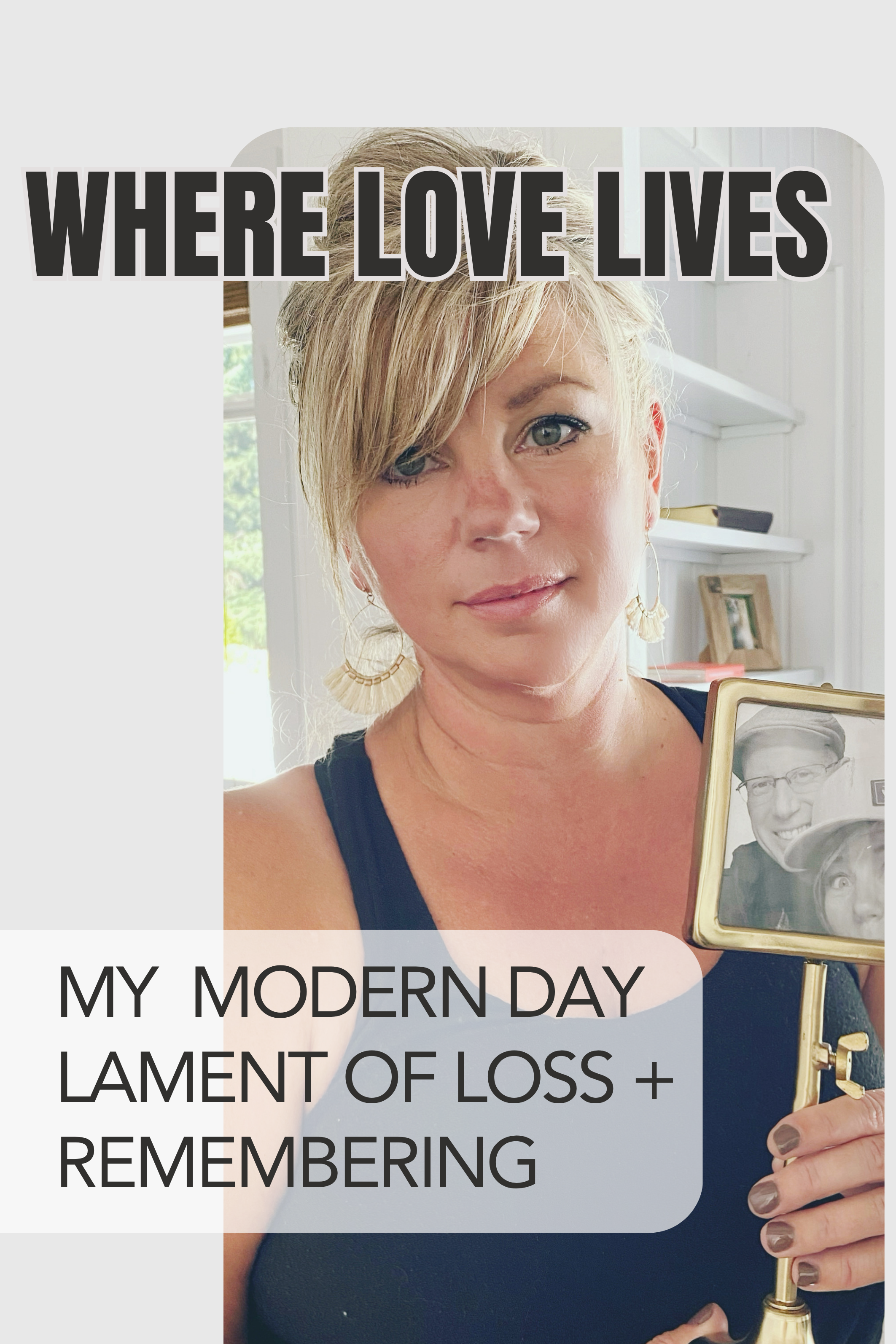
Where Love Still Lives
A Modern Lament
Before You Read
I want you to lean in and listen to this…
Love does not die when we lose our person. And in ways our person doesn’t either.
I know that may sound a bit strange, but let’s think about it for a minute. We do indeed stop physically living beside the person we love, but in our mind and hearts we keep living with them — through memory, story, laughter, faith, and the everyday ways their love still lingers in who we are and the memories that have shaped us.
When I first started writing again, I wasn’t trying to create something beautiful. I was trying to release, process, leak out my emotions…. survive basically.
There were feelings that words couldn’t hold and silence that felt unbearable. Writing became a way to speak when my heart didn’t have language yet — to honor what was, to name what still was, and to remember that love hadn’t gone anywhere.
And even now, as I write this, six years later… I am still finding a beautiful release in the writing of raw words — today it was the unfolding of my modern lament.
It’s honest. It’s messy. It’s love and loss braided together.
And I share it with you because maybe you’ve felt that too — the strange ache of loving someone who isn’t here, yet still is. Here we go:
Where Love Still Lives
My modern lament of loss + remembering.
One minute we were laughing, planning out our days. And then suddenly we were sitting behind a curtain — so many questions, so many tests.
It was the beginning of pain I’d never known before.
Pain that reached down deep and rearranged everything.
Fourteen months. They flew by and dragged on all at once. Hope. Fear. Love. Torment. All tangled up together, twisting through the same days.
The deepest kind of love I’ve ever felt —
the kind that digs into your soul,
planting memories you don’t want to forget,
even as you’re watching the leaves of your family tree start to wither.
I wanted to hold on tight — to every moment, every breath, every look. Because I knew the end of us was coming. And the knowing stole my air.
There were days I had to run outside,
just to see the world going on,
but at the same time everything in me wanted it to stop.
Because I knew the faster it moved the sooner we would end.
I would try to imagine myself walking without you —
living on without you
but I couldn’t. The thought of it made my body shut down.
Sometimes I’d start gasping for air, other times dry heaving — that’s the ugly, beautiful truth of love that hurts. It takes your breath even when you’re trying to hold it.
And yet, here I am today. Still breathing. Still holding you — maybe tighter than ever. You’re here, just differently now. Not beside me, but within me. You live in my heart and in my mind, woven into the threads of my being.
People say time heals,
but I don’t believe that.
Time doesn’t erase love —
Neither does death —
it just changes its form.
The ache stays,
but so does the gift of you.
The way you loved.
The way you gave.
The way you taught me what it means to stay.
I still see you.
I see you in the way our children love others,
serve others,
show kindness and generosity.
You taught them that.
I still hear you —
in their laughter,
their morals,
their love for Jesus.
I remember how you looked right at them —
steady eyes, a firm resolve —
and you asked,
“Do actions speak louder than words?”
They answered,
and you smiled.
You said,
“That’s right… love well.”
And that’s what we’re here still trying to do. To love well. To live like you did — with faith, with courage, with kindness.
Your life mattered.
And your love carries on.
We hold it dear.
In the same space as the ache of missing you.
Love still lives here.
Right here.
Inside all that remains.
Why This Matters
I think we forget sometimes that grief is love — still living, still reaching, still remembering.
Writing a lament like this doesn’t make the pain go away, but it gives it somewhere to rest — to be valued, and recognized.
It allows us to see that even in the cracks of heartbreak, love keeps growing.
If you’ve lost someone you love, try writing your own Modern Lament.
It doesn’t have to sound poetic or polished — it just needs to sound like you.
It’s a sacred way to tell your story of loss, to remember what you are still carrying, and to let God meet you in the ache.

You can start with a few simple questions:
What did I go through?
Where do I still feel their presence in my life today?
What did they give me that I still carry?
What do I want to remember about the love we shared?
Write it for you.
Not to move on, but to move with.
Because love doesn’t end when life does — it carries on, with us.
And sometimes, naming that love is how we keep breathing.
Write Your Own Modern Lament
A Guided Reflection for the Ones Still Learning to Live with the Love That Remains
If something in you stirred while reading this — that ache, that knowing — maybe it’s time to put words to your own story.
To honor your journey and let your heart speak what it’s been carrying.
This is how we begin to live with love in a new way — not gone, but woven in.
I’ve created a gentle guide to help you start.
Inside, you’ll find prompts and simple steps to help you hold what still hurts while remembering what still matters.
→ Get the free guide: Write Your Own Modern Lament
(It will arrive in your inbox with other valuable information about walking with grief.)
Because love still lives here — even in the midst of the ache.
And sometimes the most sacred thing we can do
is let it speak.

Widow, Grief & Brain Fog: How Deep Rest Activates Your Brain’s Cleaning Crew
When you’re grieving, sleep doesn’t come easy. Your brain’s “cleaning crew” - the glymphatic system - can’t do its work, leaving you foggy and exhausted. In this gentle guide, written for widows, discover how deep rest, hydration, natural care like essential oils, and small kindnesses can help your body and mind find rhythm again.

When Rest Feels impossible
There’s a kind of exhaustion that grief brings.
The kind that doesn’t seem to lift with a nap or the evenings of attempted sleep.
It sits behind your eyes, in your chest, in the middle of your thoughts - heavy, hazy, unrelenting.
If you’ve lost your person, you know this kind of tired. It’s not just sadness. It’s bone-deep survival.
Even when your body is still, your brain is working overtime - trying to make sense of loss, trying to keep you safe.
And when that happens, your brain’s healing rhythm—the glymphatic system—has a hard time doing its job.
⸻
The Brain’s Cleaning Crew: What the Glymphatic System Does
While you get good quality sleep, your brain runs a built-in detox system called the glymphatic system.
Think of it as your brain’s night-shift janitor.
During deep, slow-wave sleep, your brain floods with cerebrospinal fluid, which washes away toxins, stress chemicals, and waste proteins from the day.
This process clears what you’ve felt, processed, and held—all the invisible buildup of living, thinking, and surviving.
When this system flows well, you wake clearer, lighter, steadier.
But when sleep is disrupted—as it so often is in grief—the glymphatic “cleaning crew” can’t clock in. The result is what many widows describe as grief fog: forgetfulness, emotional swings, irritability, and a feeling that your brain just can’t keep up.
⸻
Why Grief Interrupts Deep Sleep
Grief activates your stress response system—the part of your brain wired to protect you from danger.
Your body releases cortisol, your heart rate rises, and your brain stays on alert, even when you want rest.
It’s common to fall asleep from sheer exhaustion and wake again in the dark hours with your mind racing.
The very rest you need most becomes the hardest to find.
Without those deep, slow-wave cycles, your glymphatic system can’t finish its nightly cleanup—and your brain starts carrying yesterday’s emotional and physical waste into today.
⸻
Signs Your Brain’s Cleaning System Is Overloaded
• Foggy or sluggish thinking
• Forgetting what you were about to do
• Emotional swings that come out of nowhere
• Physical heaviness or pressure behind your eyes
• Difficulty concentrating or praying
• Feeling “off” but not sure why
Of course, losing your spouse brings many of these issues.
Your brain is burdened with double-duty, empty spaces, new tasks, etc. — and this all brings a state of overwhelm and spinning thoughts. But also, understanding that there is a physical detox process your sleep can offer you each night to help with these things can bring a real sense of hope.
Let’s talk about some tangible ways to help find deeper sleep in the midst of your grief…
⸻
How to Support Deep Rest (and Help Your Brain HeaL
You can’t force sleep—but you can help to create the space where rest becomes possible again.
1. Create calm before bed.
Turn off screens an hour before sleep. Blue light signals your brain that it’s still daytime and suppresses melatonin. Choose quiet light, soft music, or a gentle prayer rhythm instead.
2. Hydrate often.
Your glymphatic system depends on fluid to flow. Keep a glass of water nearby throughout the day and sip before bed.
3. Try the “widow’s brain dump.”
Write down what’s looping in your mind—memories, to-dos, what-ifs, fears. You’re telling your brain: You don’t have to hold it all tonight.
4. Ease physical tension.
Apply a warm compress or massage your shoulders, neck, or jaw with a drop of lavender or copaiba blended in a carrier oil. These help calm the nervous system and release stored tension.
5. Avoid overstimulation.
Skip caffeine after 2 p.m. and heavy meals or alcohol within two hours of sleep. Both interrupt the deep-sleep cycles where brain cleansing happens.
6. Position for flow.
If comfortable, sleep on your side (especially the left)—studies show this helps cerebrospinal fluid drain more efficiently through the brain’s channels.
These practices can really help to ground your body and open it up to better sleep.
⸻
Natural Tools That Help the Body Remember Rest

Essential oils are a natural option that can help create the calm conditions your body and mind depend on: deep breathing, slower heart rate, and relaxed muscles.
To Release Tension
• Lavender – eases muscle tightness and lowers stress hormones.
• Copaiba – supports calm through the body’s endocannabinoid system.
• Frankincense – deepens breathing and grounds emotional overwhelm.
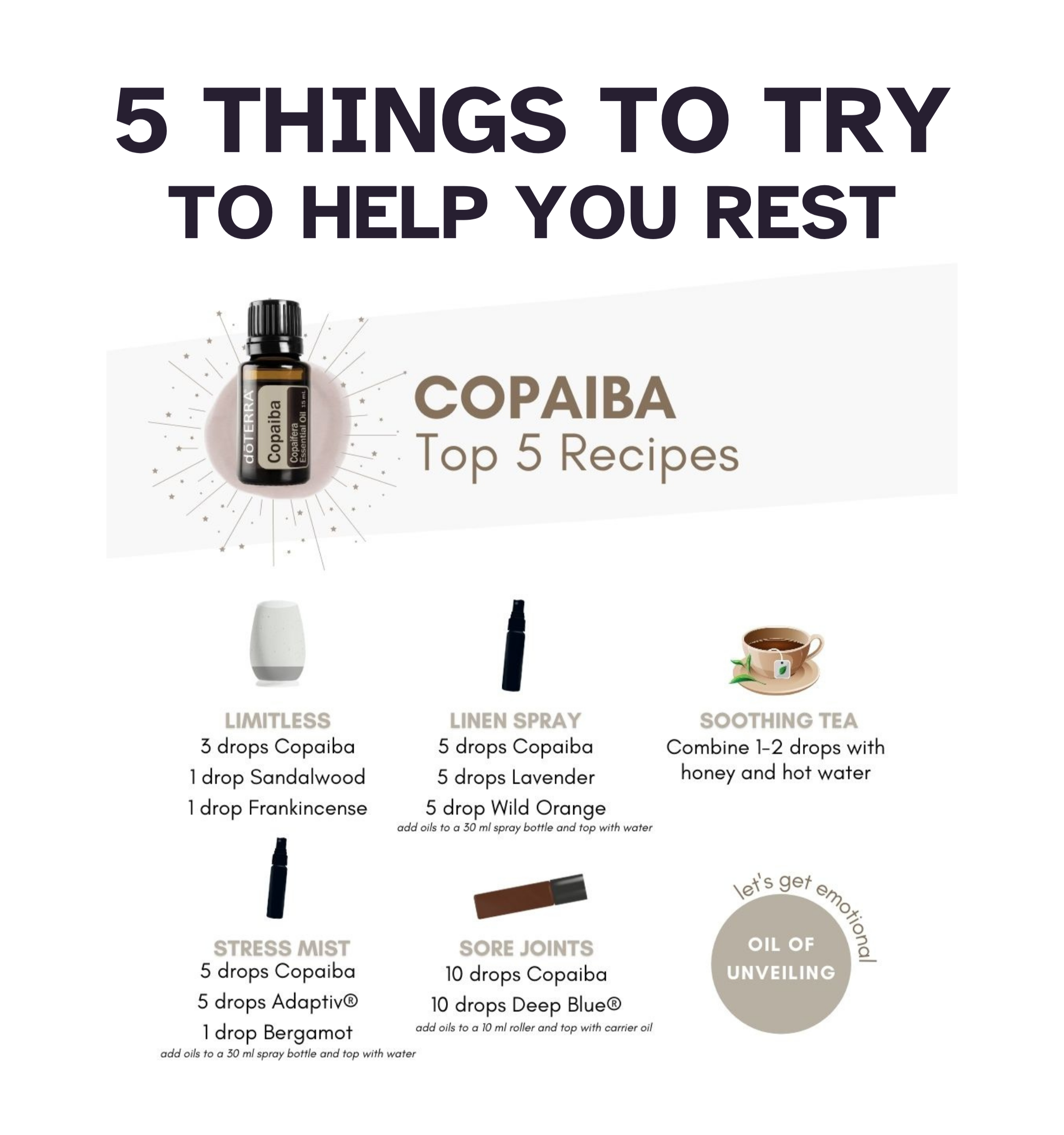
To Promote Deep Rest
Cedarwood – encourages melatonin release and stability.
Roman Chamomile – quiets restless thoughts.
Vetiver – deeply grounding; helps your body drop into restorative sleep.
How to use:
Diffuse 3–5 drops of lavender, cedarwood, or chamomile 30 minutes before bed, or add a few drops to an evening bath with Epsom salt.
For topical use, dilute 2 drops of any combination in a teaspoon of carrier oil and apply to neck, shoulders, or over the heart.
For my very favorite set and diffuser, you can grab it here: Essential oil kit + diffuser
If you would like to learn more about how essential oils work with emotions, click here
⸻
Things to Avoid (and Why They Matter)
Caffeine after 2 p.m. — Blocks adenosine, delaying sleep onset for up to 10 hours.
Blue-light screens — Suppress melatonin and keep your brain alert.
Alcohol close to bed — Fragments sleep and prevents deep, restorative cycles.
Late-night sugar or heavy meals — Keep your body metabolically active when it needs to be still.
⸻
Circle of Support TIPS: Helping a Widow FIND Rest
If you love someone who’s grieving, you can’t fix her sleepless nights—but you can help to make rest more possible.
Lighten her load. Do one small thing she doesn’t have energy for—laundry, groceries, or a meal.
Create a “rest basket.” Add herbal tea, a journal, magnesium lotion, a soft blanket, and a note: “Please care for your heart, mind and body by allowing yourself time to rest.”
Check in with curiosity, not pressure. Ask, “What’s been spinning in your thoughts?” or “What’s weighing heavier tonight?” Allowing space for your friend to release some of the mental tension she is experiencing.
Be still with her. Quiet companionship lowers stress hormones and helps her body feel safe enough to rest.
Pray peace. Short, simple prayers like “God, hold her mind steady while You keep watch” can calm both body and spirit.
⸻
A Gentle Reminder for the Weary
If your mind feels overhwelmed and your emotions keep spinning, it doesn’t mean you’re failing.
It means your brain has been working without rest, doing its best to carry what feels un-carryable.
Your body is wise.
Your brain knows how to restore you when given space and kindness.
Even here, my body is still working to protect me.
Even here, my brain remembers how to restore me.
Even here, I am being held.