
Grief fog, emotional whiplash, and nervous system protection
Grief fog and emotional whiplash can feel alarming in widowhood. This post explains why clarity, pain, and calm shift suddenly — and how the nervous system protects you.
why “I was okay… and then I wasn’t” is normal
One of the most unsettling parts of grief isn’t the pain.
It’s the sudden shifts.
You wake up and feel almost steady. You answer an email. You make a plan. For a moment, life feels manageable.
And then — without warning — the floor drops out.
Your chest tightens. Tears come fast. Everything feels heavy and unreal again.
The swing is so abrupt it can make you wonder:
Was that calm fake?
Am I going backward?
Why can’t I stay in one place emotionally?
What you’re experiencing is not instability.
It’s protection.
Grief fog is not confusion — it’s a buffering system
Grief fog often feels like:
mental slowness
difficulty concentrating
feeling detached or distant
trouble tracking conversations
a sense of unreality
This can be frightening, especially if you’ve always been clear-minded or high-functioning.
But grief fog isn’t your brain failing.
It’s your nervous system reducing input when the emotional load is too high.
When loss overwhelms the system:
attention narrows
sensory detail softens
emotional distance increases
This is the brain saying,
We cannot take all of this in at once.
Fog is not avoidance.
It’s mercy.
Why calm can appear suddenly — and disappear just as fast
Many widows feel ashamed when moments of calm appear.
They wonder if it means:
they’re “doing grief wrong”
they’re forgetting
they’re minimizing the loss
But calm doesn’t mean grief is gone.
It means a different part of the brain has come back online.
Grief involves rapid switching between brain systems:
attachment and threat networks activate during pain
the prefrontal cortex (reasoning, grounding) re-engages during calm
These shifts can happen quickly — sometimes within minutes.
So the experience of:
“I was okay… and then I wasn’t”
is not regression.
It’s the nervous system cycling between states.
This back-and-forth is how the brain prevents overwhelm.
Emotional whiplash is common — especially in early grief
In widowhood, emotional whiplash can feel extreme because every area of life has been touched by the loss.
Home.
Identity.
Future.
Security.
Belonging.
When everything is connected to the same absence, the system doesn’t get clear breaks.
So the brain alternates:
immersion in grief
temporary reprieve
Again and again.
This oscillation is known in grief science as dual-process coping — the natural movement between:
loss-oriented states (pain, yearning, tears)
restorative states (neutral focus, small moments of functioning)
You are not supposed to stay in one state.
You are supposed to move.
Why fog often lifts before the sadness does
Many widows notice something strange:
the fog clears
thinking sharpens
orientation returns
But the sadness remains.
This can feel confusing.
But it makes sense physiologically.
As the stress response settles:
oxygen and carbon dioxide balance improves
muscle tension decreases
the brain regains clarity
Emotion lingers longer than confusion.
So when you feel clearer but still sad, nothing has gone wrong.
Your body simply completed one part of the stress cycle.
Gentle ways to work with fog and whiplash
You don’t need to fight these states.
You can support them.
Name what’s happening
“This is fog.” “This is a shift.” Naming reduces fear.Lower expectations during fog
This is not the time for decisions or deep conversations.Orient gently when clarity returns
Notice where you are. What feels solid. Let yourself re-enter slowly.Trust the rhythm
Calm does not mean forgetting. Pain does not mean failure.
No forcing.
No fixing.
Just cooperation.
What your nervous system is really doing
When grief swings between fog, pain, and brief calm, your body is not betraying you.
It’s pacing the loss.
It’s protecting you from carrying the full weight all at once.
It’s keeping you alive inside a world that no longer matches the one you knew.
A sentence to return to when the shifts feel scary
The movement between fog, pain, and calm is not instability — it is the nervous system protecting you from overwhelm as you grieve.
You are not broken because you change throughout the day.
You are surviving something that changed everything.
Closing the series
Grief is not one feeling.
It is a process moving through a body.
Waves rise and settle.
Tears release pressure.
Fog buffers what’s too much.
Calm returns — not as closure, but as breath.
None of this means the loss mattered less.
It means your body is doing what it was designed to do:
carry love, survive rupture, and bring you back to yourself — again and again.
Why crying helps the body release grief and why holding it in makes it harder
Crying during grief can feel frightening, but it often helps the nervous system release stress. This post explains why tears can bring relief in widowhood.

For many widows, crying feels dangerous.
Not emotionally — physically.
There’s a fear that once tears start, something will break open that can’t be contained. That the body will spiral. That the wave will grow instead of pass.
So many widows learn to do this instead:
swallow hard
tighten the jaw
distract
hold their breath
wait it out
It looks like strength.
But inside the body, something else is happening.
Crying is not a loss of control — it’s a nervous system response
Emotional crying is not the same as panic or emotional collapse.
It’s a biological response that involves multiple systems working together:
emotion processing
breath
facial muscles
tear glands
autonomic nervous system regulation
When grief rises, the sympathetic nervous system activates — heart rate increases, muscles tighten, breath shortens.
Crying often appears near the peak of that activation.
Not as a failure — but as a signal that the body has reached its limit and is beginning to release.
What research shows about crying and time
Studies on emotional crying consistently show:
most crying episodes last 5–20 minutes
intense crying rarely sustains beyond 30 minutes unless re-triggered
after crying, many people report:
calmer breathing
reduced tension
emotional softening
a sense of release
This doesn’t mean people feel “better.”
It means the stress response has begun to complete its cycle.
The grief remains.
The intensity shifts.
Why holding back tears often prolongs distress
Suppressing tears doesn’t stop the wave.
It interrupts the body’s attempt to regulate.
When tears are held back:
muscle tension stays high
breath remains shallow
stress hormones linger longer
emotional pressure builds internally
This is why widows often say:
“I didn’t cry — but I felt worse afterward.”
The wave had nowhere to go.
Crying isn’t what overwhelms the body.
Unreleased activation does.

The moment tears come is often the turning point
Many widows notice a pattern they’ve never been told to trust:
intensity builds
pressure peaks
tears come
breath loosens
fog begins to thin
Crying doesn’t end grief.
But it often marks the crest of the wave — the point where the nervous system begins to downshift.
The storm hasn’t passed.
But the worst of the wind has moved through.
When crying feels frightening or out of control
Some widows experience crying that feels panicky, breathless, or destabilizing.
This usually happens when:
grief is layered with trauma
the body is already exhausted
the nervous system has been in high alert for too long
tears are mixed with fear of the tears
In these moments, crying isn’t the problem.
The fear around the crying is.
Supporting the body — rather than stopping the tears — is what helps.
Gentle ways to support crying without forcing it
This is not about “letting it all out.”
It’s about staying with the body while it releases.
You might try:
placing a hand on your chest or stomach
allowing your breath to lengthen naturally after a sob
sitting or lying down so the body doesn’t have to hold itself up
letting your face soften instead of clenching
Nothing dramatic.
Nothing performative.
Just support.
What crying is actually saying
Crying is not saying:
“I can’t handle this.”
It’s saying:
This matters.
This hurts.
I need release.
Tears are not regression.
They are communication.
They are the body speaking when words are insufficient.
A sentence to hold when tears come
Crying often marks the peak of a grief wave, and allowing it can help the nervous system begin to settle rather than prolong distress.
You are not unraveling when you cry.
You are releasing what your body can no longer carry silently.
Coming next
In the next post, we’ll talk about grief fog, sudden calm, and emotional whiplash — and why going from “I’m okay” to “this is unbearable” and back again is not instability, but protection.
Because once widows understand that, they stop judging themselves for surviving.
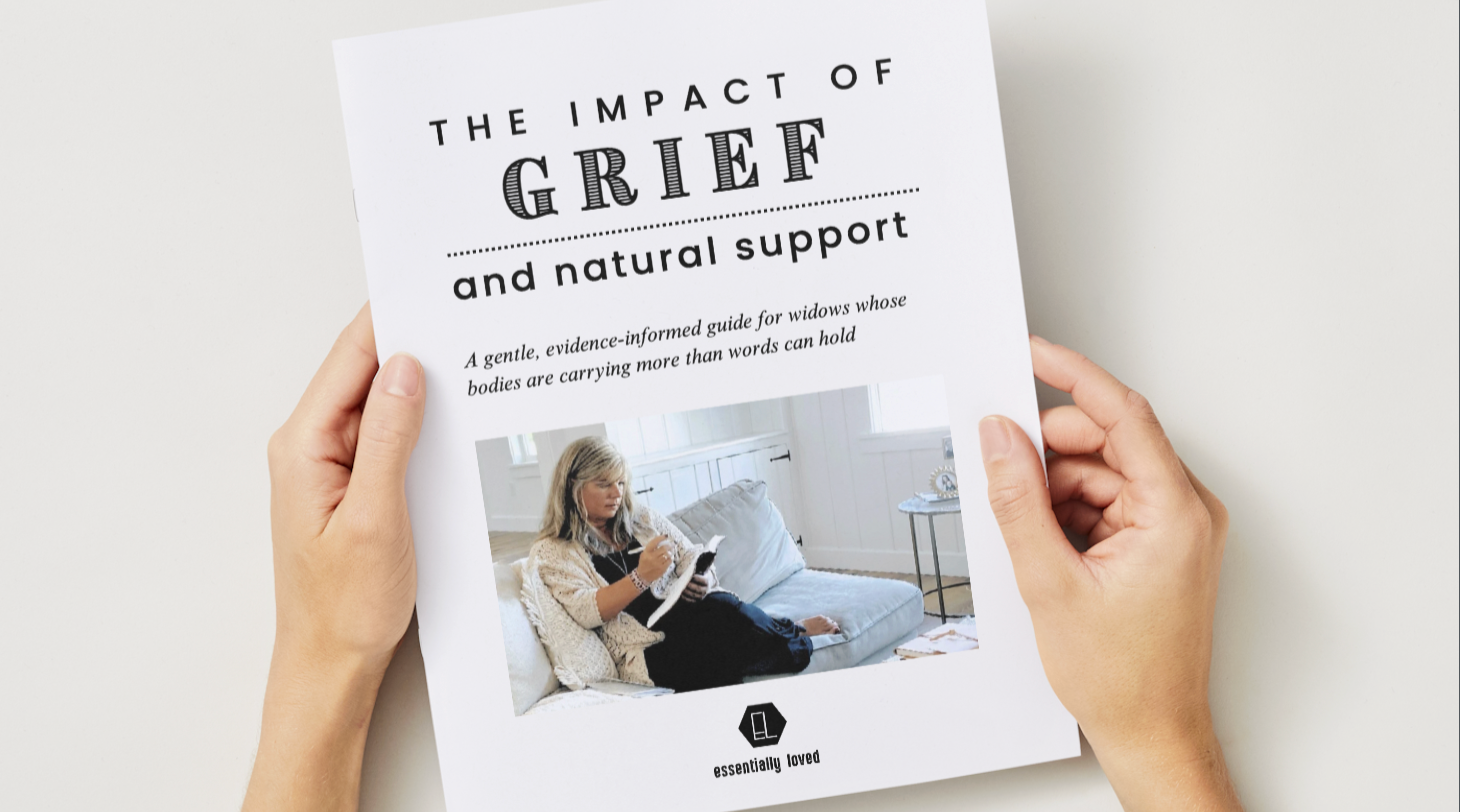
Want to learn more and find some practical helps? You can purchase The Impact of Grief Ebook
This article explains why crying during grief can help the nervous system release stress rather than make grief worse. It explores emotional crying, stress hormones, and parasympathetic regulation in widowhood, showing how tears often mark the peak of a grief wave and help the body settle. This science-informed grief education helps widows understand their tears, reduce fear around crying, and trust their body’s natural responses to loss.
How long grief waves last and why they feel endless when you're in them
Grief waves can feel endless, especially in widowhood. This post explains how long acute grief waves typically last, why time feels distorted during grief, and how the nervous system eventually settles.
One of the most fear-inducing parts of grief isn’t the pain itself.
It’s the fear that it won’t stop.
A wave hits and your body tightens. Your breath shortens. Your chest aches. Tears come fast or not at all. Thinking narrows until everything feels urgent and unbearable.
And somewhere inside, a quiet panic forms:
What if this never settles?
That fear makes grief harder than it needs to be.
So let’s talk honestly — and accurately — about what’s happening inside the body when a grief wave hits.
Acute grief waves have a biological time course
When grief surges, the body enters an acute stress response.
This involves:
activation of the sympathetic nervous system
release of stress hormones like adrenaline and cortisol
narrowing of attention and heightened emotional intensity
This state feels all-consuming — but it is not infinite.
Across stress-response and affective neuroscience research, there is a consistent finding:
The body cannot maintain peak physiological arousal indefinitely.
In most people:
acute emotional surges peak and begin to resolve within about 10–30 minutes
even very intense waves usually soften within 20–45 minutes
longer episodes often involve re-triggering, not a single uninterrupted wave
This doesn’t mean the sadness disappears.
It means the intensity begins to shift.
The wave moves.
Why grief feels endless while it’s happening
If grief waves are time-limited, why do they feel infinite?
Because during high emotional arousal, the brain’s sense of time changes.
When the stress response is active:
the prefrontal cortex (reasoning, time awareness) goes partially offline
the brain shifts into threat-based processing
the present moment expands and stretches
This is why:
five minutes can feel like an hour
you lose track of time while crying
you feel trapped inside the moment
This isn’t imagination or exaggeration.
It’s how the brain works under stress.
So when a widow says, “It felt like it would never end,” she’s telling the truth — about the experience, not the biology.
Crying often marks the crest of the wave
Many people worry that crying is what keeps a grief wave going.
In reality, emotional crying often happens near the peak of the stress response.
Studies on crying show that:
most crying episodes last 5–20 minutes
crying can activate parasympathetic (calming) pathways
after crying, many people report some degree of relief or settling
Crying doesn’t end grief.
But it often helps the body complete a stress cycle.
Tears are not the wave getting worse.
They are often the wave turning.
Why waves repeat throughout the day
Grief rarely comes as one long, steady experience.
Instead, it moves in cycles.
This is explained by what grief researchers call dual-process coping — the natural oscillation between:
loss-oriented states (pain, yearning, tears)
restorative states (neutral focus, functioning, brief calm)
Your brain cannot stay fully immersed in loss all day.
So it moves you in and out.
In early widowhood, this can happen:
multiple times an hour
dozens of times a day
This isn’t emotional instability.
It’s neurobiological protection.
The body is dosing the pain.
When waves last longer — what that usually means
Sometimes grief waves feel longer, heavier, or harder to come out of.
This usually isn’t because the grief itself is “stronger.”
Common reasons include:
exhaustion or sleep deprivation
hunger or dehydration
cumulative stress
repeated memory activation or rumination
lack of any settling input (rest, support, grounding)
In these cases, waves may:
stack back-to-back
feel like one long surge
take longer to soften
This is nervous system overload, not failure.
And it’s addressable.
Gentle practices that can help a wave move through
Nothing here is about stopping grief.
These practices simply help the body do what it already knows how to do: settle after a surge.
You don’t need to do all of these.
Even one is enough.
Name the wave
Quietly saying, “This is a wave,” can reduce panic and help the body stay with the experience.Support the breath without forcing it
Let your breath lengthen naturally. Even placing a hand on your chest can signal safety.Reduce stimulation
Lower lights. Sit or lie down. Fewer inputs help the nervous system exit high alert.Allow the tears
If they come, let them come. Resisting often prolongs distress.Orient gently when the fog lifts
Notice where you are. What you can see. What feels solid. This helps the brain re-anchor.
These are not fixes.
They are permissions.
A sentence to return to mid-wave
Most grief waves rise and begin to settle within minutes, even when the pain feels endless — because the nervous system is designed to crest and fall, not stay in peak distress.
You are not failing because it hurts this much.
You are surviving something that hurts this much.
Coming next
In the next post, we’ll look closely at why crying helps instead of harms, what’s happening in the nervous system during tears, and how to stop fearing the moment emotion breaks through.
Because understanding that changes everything for widows who’ve learned to hold it all in.
Why grief can feel like a storm and what your body is actually telling you.
Grief often feels overwhelming because it moves through the body in waves. Sudden surges, foggy thinking, and intense emotion are not signs of weakness — they’re the nervous system responding to loss. Understanding what your body is doing can soften fear and help you ride each wave with more trust.

Grief rarely arrives as something gentle.
It comes like weather — sudden, disorienting, and powerful enough to change the landscape of your inner world without asking permission.
One moment you are functioning.
The next, your chest tightens, your breath shortens, your thoughts scatter, and something inside you braces as if danger has entered the room.
This is why grief so often feels like a storm.
Not because you are dramatic.
Not because you are unstable.
But because your body is responding to loss exactly the way it is designed to respond to threat.
A sudden loss creates a pressure shift inside the body
In a physical storm, the air pressure changes before the rain ever falls. The body senses it first.
Grief works the same way.
When someone you love is suddenly absent, your nervous system does not interpret that as “sad news.” It interprets it as a rupture in safety and attachment.
So the body responds:
Heart rate increases
Breathing becomes shallow or tight
Muscles brace
Thinking narrows
Emotions surge quickly and intensely
This is not emotional weakness.
It is the acute stress response activating to protect you.
Your body is trying to survive a world that no longer makes sense.
Grief moves in waves because the body cannot hold everything at once
One of the most confusing parts of grief is how it comes and goes.
You may feel relatively okay one moment — and then suddenly overwhelmed the next. The shift can be fast enough to make you wonder if something is wrong with you.
What’s actually happening is this:
The nervous system cannot stay at peak intensity indefinitely.
When grief surges, the body enters a high-alert state. Stress hormones rise. Attention narrows. Emotion intensifies.
But that state is not sustainable.
So the body does what it is designed to do:
it crests — and then begins to settle.
Within a single day, grief often moves in waves:
rising suddenly
peaking intensely
then easing enough for breath, clarity, or orientation to return
The loss does not disappear.
But the wave passes.
This cycling is not instability.
It is protection.
Crying is often part of the release, not the problem
Many people fear the moment tears arrive.
“If I start crying, I won’t stop.”
“If I let this out, I’ll fall apart.”
But emotional crying is not usually what prolongs a grief wave. In many cases, it signals that the body has reached the crest of the stress response.
Crying activates calming pathways in the nervous system. It can help shift the body out of high alert and toward settling.
The tears do not mean the storm is getting worse.
They often mean pressure is being released.
The fog is not failure — it’s protection
Alongside the waves, many people experience fog.
Thinking feels slow.
Words don’t land.
The world feels distant or unreal.
This fog is not confusion or denial.
When the nervous system is overloaded, clarity is often the first thing to go. Narrowing awareness helps protect the brain from taking in more than it can handle.
As the wave settles, many people notice:
the fog thinning
orientation returning
the ability to engage coming back online
This does not mean the grief is gone.
It means the body found its way back to you again.
What your body is actually saying
When grief feels like a storm, your body is not saying,
“Something is wrong with you.”
It is saying:
This loss matters.
I am trying to keep you safe.
We cannot carry all of this at once.
The waves, the tears, the fog, the sudden quiet — these are not signs of failure.
They are signs of a nervous system working hard to survive love that was torn away.
A sentence to return to when the wind picks up
Grief moves through the body in waves, and while the loss remains, the nervous system is designed to rise, crest, and settle — even when the storm feels overwhelming.
You don’t have to control the storm.
You don’t have to rush the calm.
You could try saying this out loud as a reminder:
“This wave will move.
My body knows how to come back.”
Telling yourself this often will remind your brain and body of these simple truths and help regulate you, and build trust with your process.
I hope this help!
Sending yo uso much love,
Kimber
Coming next in this series
In the next posts, we’ll slow this down and look more closely at what’s happening inside the body — including:
Understanding the body doesn’t take the pain away.
But it does remove the fear — and fear is often what makes grief harder than it already is.

Grief often feels like a storm because it moves through the body in waves. In this post, I explain what happens in the nervous system after the loss of a spouse — including grief surges, emotional fog, crying, and sudden shifts between calm and overwhelm. This grief education is designed specifically for widows who feel confused by their body’s responses and want a science-informed, compassionate understanding of why grief comes and goes. Understanding how grief waves work can reduce fear, normalize physical symptoms of grief, and help widows trust their body during acute grief.
Good Grief, what does it even look like?

I wish someone would tell me what GOOD GRIEF looks like. I take that back. No, I don’t! And here is why…
It doesn’t look like one particular thing. It doesn’t look the same from person to person. It doesn’t look the same day to day, or even hour to hour, or sometimes even minute to minute. Show me someone who loved deeply and lost, and I will show you yet another way that grief will show up on the scene. It is complex and individual to the person. And…. long lasting for most.
And MOURNING… the act of processing the deep abiding, long-lasting, grief. That is another thing entirely. Show me people who do that well and I will show you the most raw, revealing, public, tear your sackcloth, scream in the streets display of wailing you have ever seen. Stop and really think on that for a minute, how would that make you feel to witness? Um… perhaps too emotional for you? I mean, what would you do with that? Could you watch it comfortably from afar? Would you gently step up and touch it? Would you try to approach and hug it away? OR would you shift your attention elsewhere? I think internally your heart would quicken its step a little at that emotional exposure. Are they mad (as in out of their minds)? Do they need emergency assistance? Why can’t they control themselves? Many would want to do something about it to make it stop because it is just plain uncomfortable. And it should be…and it will be. And so what is a person going through it to do? Our culture holds many silent beliefs about this.

Okay, let’s open this door for a second…should those grieving “contain and control” the majority of the time? Is it a private matter? And let’s talk about the speed of it. Should it change its appearance rather quickly? Like would it be appropriate if the deep, incapacitating grief lasted a month or maybe two tops, following the loss? Then around 2-3 months we should probably expect the person to start engaging more and stepping back into the “real world” as many say. Oh, but they still seem and act different, perhaps guarded, distant, gloomy. Well, by six months surely they will be well on their way back to normal. And by a year… BAM… rolling forward with serious strides… in fact… some may say the wounds of grief should be basically healed at this point.
Oh friends, I am sitting here telling you that (let me count) it has been eight months since my husband passed and I am not sure I feel like I have taken one step towards healing. In fact, I am feeling the depth of the loss more deeply. It’s funny how the reality of all that the loss touches takes serious time to press into your thinking bank. Memory serves us well, until it doesn’t. My memory still tells me from experience he is going to walk through the door, that I need to check with him, that he is the expert and I need to wait for his opinion, that I am hurting and he is the one physical space where I can rest and feel comfort…. that last one is literally killing me. The VERY thing I need him most desperately for (comfort) is present because I NEED him most (first place besides God in my life). That one makes me feel like I am going mad. Reasoning ones absence in our lives doesn’t come easy. It takes time, a ton of different emotions, a bazillion spoken (or written) words, and even more thinking through. It hurts to think, talk, do and so our brains naturally do their very best to avoid it. We are literally fighting within our heads ALL THE DAY LONG. The brain does all it can to avoid the pain and at the same time it is screaming at you about your inabilities. Inability to focus, to do, to remember, to work through it. It is like 10,000 gears are working in different directions and at one no certain point they just end up jamming. Shutting down. Frozen. This typically happens to me in the late afternoon. I find myself DONE and ready to just close my eyes, sleep the rest of the day, or just turn everything off around me. I am literally exhausted mentally and physically with the simplest of things seeming impossible to accomplish. My brain just won’t work anymore.
This leads me into my current stage of discomfort with my grief. I am BEYOND ready for this pattern to be over, and to move on. I have things to do, I need to earn an income, I need to flipping just plain feel happy. I fear I am exhausting my friends, and I am certainly exhausting myself in the trying. But one can’t just give up… I must keep striving.
I do however trust the good, some relief from grief, is coming. I cling to that hope. A day will come when I have held more happy than sad within my minutes. I will always remember, I will always be sad it went how it did, but I will also look forward to the new. For now… I’ll just continue to feel and process until that day comes. So that the day will come.
And for those of you who are walking alongside someone who is grieving, or even approaching someone who is grieving. You don’t have to understand it. In fact, you probably can’t. But you can have immeasurable grace and love for them. Ask to help them with tangible tasks. The collections of those are often the most overwhelming. And listen… don’t be afraid. Let them RANT and just listen, and care. As they talk they are processing it out themselves. Fill the space with love and grace.
Be well,
Kimber