
Essential Oils & Practices for Grief Support for Widows | Supporting the body, brain, breath, and heart.
Grief after loss lives in the nervous system, the body, and the breath. This post shares essential oils and embodied practices for widows—supporting sleep, pain, digestion, emotional regulation, journaling, and gratitude as you carry grief forward.

Grief isn’t just emotional…
For widows, it lives in the nervous system, the gut, the immune response, the muscles, memory, and the breath.
Sleep is disrupted.
Pain increases.
Appetite changes.
The body stays on alert.
The mind feels foggy or overwhelmed.
This is not happening because you are weak.
It is grief doing what grief does.
Because grief lives in the body, it helps to have practices that support the body—with honesty. care, patience, and love.
Essential oils work by engaging these systems through scent, skin, and internal pathways, helping the body settle enough to process what the heart is carrying. Paired with embodied practices—breath prayer, writing, stillness, gratitude—they become loving companions in widowhood.
Not to avoid or repress grief.
But to help you stay present while you carry it.
How Oils + Practices Support Grief

Scent communicates directly with the limbic system—the part of the brain connected to emotion, memory, and safety. Writing engages both sides of the brain, allowing emotion and meaning to work together. Breath anchors the nervous system in the present moment.
Together, these practices:
support nervous system regulation
soften chronic stress responses
help integrate memory and emotion
create space for prayerful presence
They don’t erase sorrow.
They hold space for it.
1. Sleep
Settling the nervous system into rest
What it supports
Parasympathetic (rest-and-restore) activation
Reduced nighttime stimulation + alertness
Deeper, more consistent sleep rhythms
Why it works
Certain plant compounds influence GABA activity, limbic calm, and cortisol rhythms—all essential for sleep.
Use
Aromatic
Lavender • Roman Chamomile • Cedarwood (diffuse before bed)
Topical
Lavender + carrier oil on feet, chest, or back of neck
Internal
Lavender in warm tea or honey before sleep
Practice
Breath prayer in bed:
Inhale: “I am safe.”
Exhale: “I can rest.”
2. Waking Up — Uplifting & Hopeful
Gently re-engaging
What it supports
Dopamine and serotonin signaling
Mental clarity and motivation
Emotional release without overstimulation
Why it works
Citrus and herbal oils stimulate alertness centers and mood pathways while supporting oxygen flow to the brain.
Use
Aromatic
Orange • Grapefruit • Rosemary
Topical
Orange + rosemary on wrists or back of neck
Internal
Lemon or orange in warm water on waking
Practice
Open curtains
Speak one hopeful truth aloud while inhaling
3. Calming While Taking Action
Steady focus without panic
What it supports
Balanced nervous system tone
Reduced cortisol during decision-making
Calm energy for tasks that must be done
Why it works
These oils help regulate the stress response while maintaining mental clarity.
Use
Aromatic
Bergamot • Lavender • Vetiver
Topical
Roller on wrists before meetings, errands, or calls
Internal
Bergamot in tea before stressful tasks
Practice
Box breathing: inhale 4 / hold 4 / exhale 4 / hold 4
4. Grounding When You Feel Unstable
Re-anchoring when emotions feel shaky
What it supports
Sensory orientation
Vagal tone
Emotional presence and embodiment
Why it works
Resinous and earthy oils connect sensory input to emotional regulation and physical awareness.
Use
Aromatic
Frankincense • Vetiver • Patchouli
Topical
Diluted oil on feet or along spine
Internal
Frankincense in capsule or drop under tongue
Practice
Feet flat on the floor
Name what you feel in your body while breathing
5. Anti-Inflammatory Support
Easing the physical toll of prolonged stress
What it supports
Immune balance
Reduced inflammatory signaling
Tissue repair and recovery
Why it works
Many plant compounds influence inflammatory pathways and oxidative stress.
Use
Topical
Helichrysum • Ginger • Frankincense in carrier oil
Internal
Turmeric or frankincense blends with meals
Practice
Gentle warmth (compress or blanket)
Stillness afterward.
6. Pain Relief
Releasing tension and guarding
What it supports
Circulation
Muscle relaxation
Pain perception modulation
Why it works
Cooling and calming oils influence nerve signaling and muscle response.
Use
Topical
Peppermint • Lavender • Eucalyptus (massage slowly)
Internal
Ginger or turmeric
Practice
Long exhale breathing during massage
7. Digestion & Appetite
Restoring the gut–brain conversation
What it supports
Digestive signaling
Appetite awareness
Reduced nausea and tightness
Why it works
The gut and nervous system are deeply connected; these oils support vagal tone and digestive comfort.
Use
Aromatic
Peppermint • Ginger • Lemon
Topical
Clockwise abdominal massage (diluted)
Internal
Peppermint or ginger tea
Lemon in water before meals
Practice
Hand on belly
Slow breaths before eating
8. Forgiveness & Emotional Softening
Letting go without bypassing
What it supports
Emotional regulation
Heart-centered processing
Reduced emotional reactivity
Why it works
Floral oils engage emotional memory and parasympathetic response, supporting tenderness rather than defense.
Use
Aromatic
Rose • Bergamot • Ylang-ylang
Topical
Over the heart during reflection
Practice
Write what hurts
Then write what you’re releasing
9. Breath Prayers
Deepening connection through breath
What it supports
Vagus nerve activation
Emotional safety
Prayerful presence
Why it works
Breath and scent together slow heart rate and anchor attention.
Use
Aromatic
Frankincense or lavender
Topical
Chest or palms before prayer
Practice
Inhale 4 / Exhale 6–8
Pair with sacred phrases
10. Journaling & Gratitude
Opening the mind and heart
What it supports
Emotional integration
Memory processing
Creative expression
Why it works
Scent supports emotional safety while writing integrates brain hemispheres—bringing emotion and meaning back into conversation.
Use
Aromatic
Lavender • Rose • Bergamot
Topical
Roller on wrists while writing
Internal
Warm tea with citrus oil
Practice
Write freely
No fixing, no filtering
Gratefuls Practice
Write 12 small gratefuls from the last 24 hours
Write 3 large gratefuls across your lifetime
This practice helps the nervous system notice safety again and preserves what grief fog often tries to erase.
11. Emotional Regulation
When feelings come in waves
Supports
Hormonal balance
Nervous system steadiness
Blend
Clary Sage • Bergamot • Lavender
Practice
Hand on chest
Gentle rocking or swaying
12. Creative Clarity & Discernment
When grief fog dulls insight
Supports
Focus
Memory
Inspired thinking
Blend
Basil • Rosemary • Lemon
Practice
Use during creative journaling or prayerful listening

The Big Picture
Essential oils support grief by helping the body feel safe enough to:
rest
breathe
digest
soften
feel
and stay present
They don’t replace the work of grief.
They hold the body steady while the heart does it.
If you are a widow reading this, know this:
You are allowed to be supported.
Your body matters in your grief.
And gentle care is not a luxury—it is part of how you stay healthy and keep moving step by step.
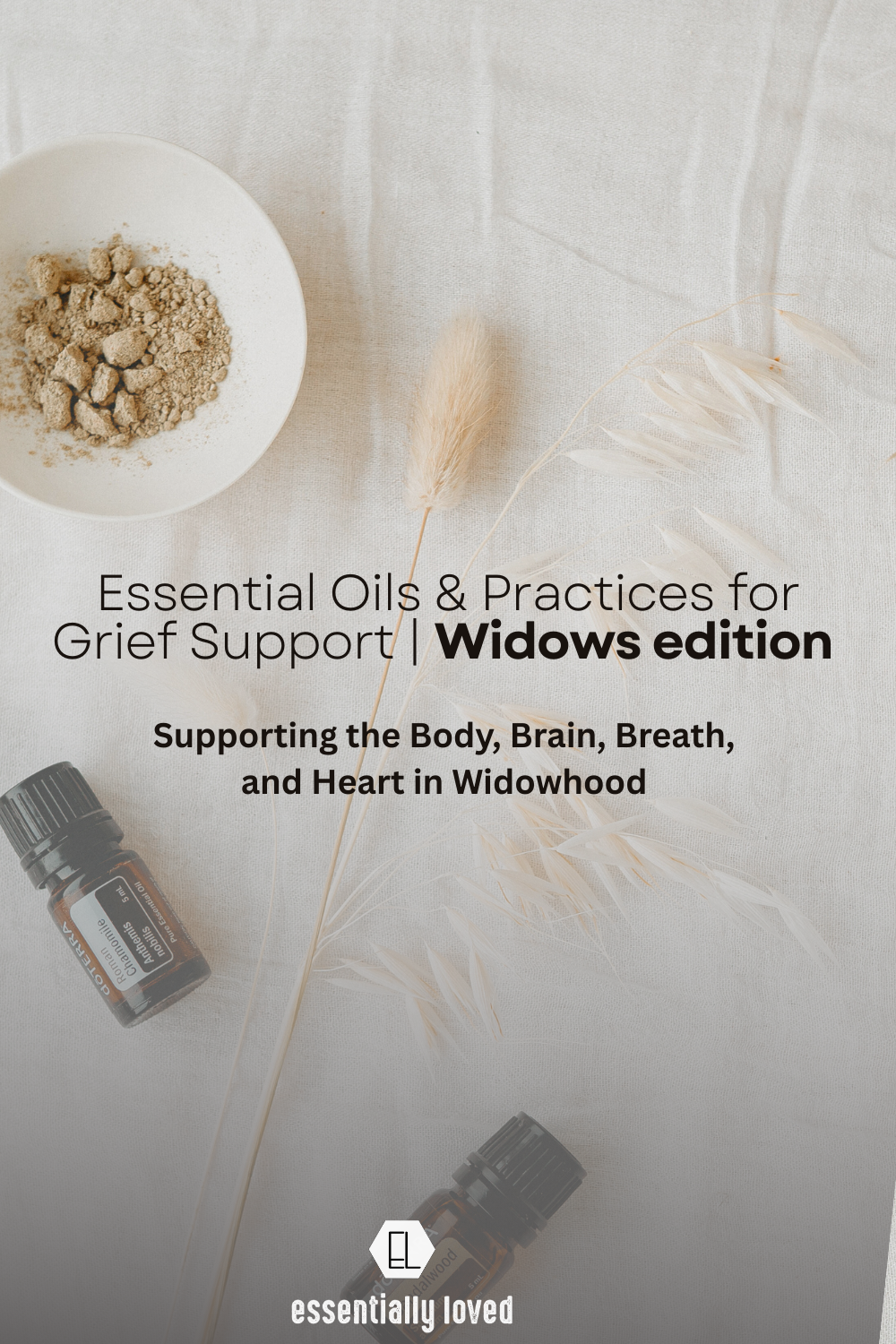
natural ways to come alongside your grief and help it to become integrated within your body, mind and life as you move forward as a widow.
This article explores essential oils and embodied practices for grief support in widowhood, focusing on how grief affects the nervous system, body, brain, breath, digestion, sleep, pain, and emotional regulation. It offers holistic grief support for widows through essential oils used aromatically, topically, and internally, alongside practices such as breath prayer, journaling, gratitude, and nervous system regulation. This resource is designed for widows seeking gentle, faith-informed, body-based grief care that honors loss while supporting presence, integration, and daily life after death.