The Widow’s Holiday Cry — What She Wishes Everyone Understood
Raw truths widows need to know to get through Christmas.
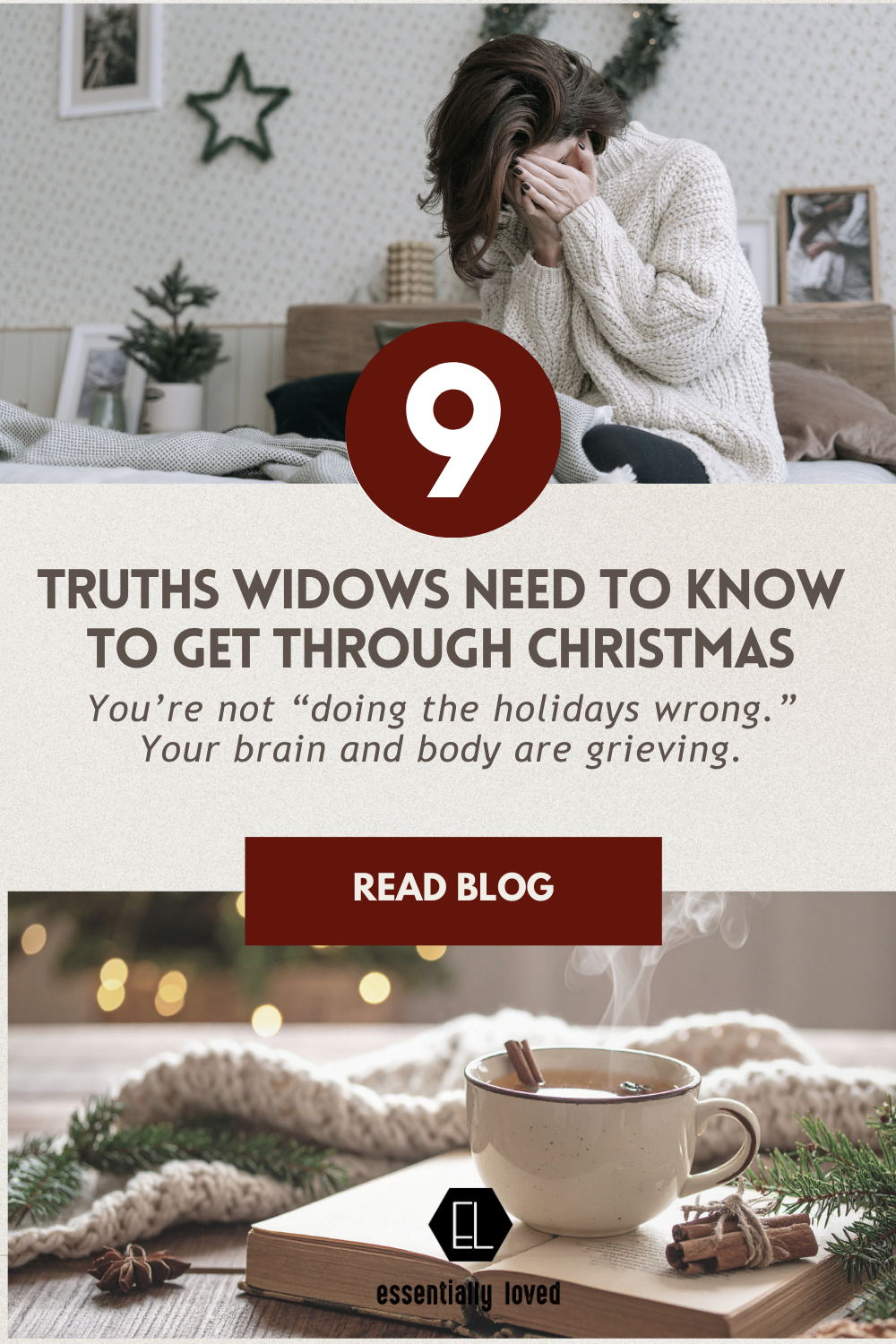
“I’m trying. I really am. But Christmas hits places inside me I can’t explain. My whole body feels the absence — the silence at the table, the vacant chair, the empty side of the bed, the traditions that now feel like a wound. I want people to know I’m not being dramatic. I’m not avoiding joy. I’m just trying to survive something my heart, my mind, and my nervous system never learned how to carry.”
Christmas after loss is heavy.
Not just emotionally — but in your mind, your nervous system, your routines, and your body.
If this is your first Christmas without your person… or your tenth… the holidays have a way of pressing into the bruise. The world moves into celebration; widows often move into survival mode.
This isn’t weakness.
It’s grief.
It’s love.
It’s biology.
It’s the story you’re carrying.
And there are real truths that can help you get through this season with tenderness, capacity, and compassion for your whole self.
Before we get to those truths, here’s the part widows almost never say — but deeply wish others understood.
What Widows Wish Everyone Understood at Christmas — But Rarely Say Out Loud
“I won’t tell you this because I don’t want to ruin your holidays… but I am barely holding myself together.”
“The decorations, the music, the gatherings — they all carry landmines. I never know which one will break me open.”
“I wish I could explain how exhausting it is to look ‘fine’ when inside, I’m either numb or on the edge.”
“I don’t want pity. I don’t need you to fix anything. I just want to be seen without being pushed.”
“If I’m quieter, it’s not because I don’t care. It’s because my nervous system is overloaded.”
“I’m terrified of being ‘too much’ — too emotional, too fragile, too complicated. So I stay silent.”
“It takes courage to show up to anything this month.”
“I want to be invited, even if I can’t say yes. And I want my no, or avoidance to be okay.”
“I still talk to him in my head. I still imagine what he would say. December brings all of that closer.”
“I’m not choosing sadness over joy — I’m choosing honesty over avoiding”
“Your love helps… but nothing fills the space where he should be.”
“Most days, I’m surviving something invisible — but nearly unbearable. It touches everything.”
“I just need someone who lets me be real. Someone who doesn’t rush me. Someone who understands that this isn’t just a season… it’s a whole-body ache I’m learning to live with.”
These are the truths widows live in — silently, bravely — during the holidays.
And here are the truths you need to know to get through them.
9 Truths Widows Need to Know to Get Through Christmas
1. You’re not “doing the holidays wrong.” Your brain is grieving.
Holiday grief isn’t just emotional — it’s neurological.
Widowhood rewires your threat system, your memory pathways, and your emotional regulation. The sights, smells, and sounds of Christmas can activate the deepest parts of loss.
There is nothing wrong with you.
Your brain is trying to protect you.
2. Overwhelm is your body asking for safety.
That tight chest, the sudden exhaustion, the dizziness in crowded rooms…
This is somatic grief.
Your nervous system is overloaded, not broken.
Small grounding moments help:
slower, extended exhale
step outside
hand on your heart
unclench your jaw
Your body needs presence, not pressure.
3. You’re allowed to make Christmas smaller this year.
Widowhood changes capacity.
You can choose:
simple traditions
quiet mornings
new plans
rest over pressure
“not this year”
Your worth is not measured by how well you perform holiday joy.
4. Loneliness during the holidays is not failure.
Holiday loneliness for widows is not about being alone.
It’s about missing the one person who was your witness, your safe place, your home.
Feeling that ache is not weakness — it’s love with nowhere to land.
5. December uses more emotional energy than any other month.
Widows carry:
increased cortisol
impaired sleep
grief-triggered memories
decreased capacity for decision-making
social burnout
Lower your expectations.
Give yourself margin.
Rest is not avoidance — it’s survival.
6. You need a circle of support — even if it feels vulnerable.
Widows hesitate to ask for help.
But connection literally reduces grief’s load on your nervous system.
Ask for:
someone to sit with you
someone to check in
someone to pray
someone to help with tasks
You’re not meant to carry December alone.
7. Your body remembers anniversaries before your mind does.
If your spouse died in winter, or if the holidays were complicated, your body holds that timeline.
That heaviness you feel early in December?
It’s memory stored in your nervous system.
8. Honoring your person is allowed — and healing.
Pick one meaningful thing:
light a candle, make their favorite food, write their name, tell their story.
This isn’t about moving on.
It’s about continuing love in a new form.
9. You do not have to navigate holiday grief alone.
Most widows feel invisible in December.
That’s why I created the Widows Support Letter — a free, gentle, grief-informed newsletter offering:
nervous system tools
somatic practices
spiritual grounding
circle of support helps
grief education
compassionate guidance
reminders you’re not walking this alone
It’s support that meets you in the ache — not above it.
If you're facing the holidays without your person, this is your safe place to land.
You don’t need to be strong.
You don’t need to perform.
You don’t need to pretend you’re okay.
You just need to be held — even for a moment — in a world that doesn’t understand how deep this goes.
👉 Sign up for the free Widows Support Letter below:
Real support. Real stories. Real presence. Especially when the holidays are too much.
Christmas is one of the hardest seasons for widows because grief affects the whole body—mind, nervous system, routines, somatic stress patterns, and emotional capacity. Widows often experience holiday triggers, overwhelm, loneliness, sensory overload, and deep nervous system fatigue. This post offers practical support for widows facing Christmas after loss, including somatic grounding tools, emotional regulation strategies, spiritual support, grief education, and ways to create a circle of support. It explains why holiday grief feels heavier, why the body reacts, and what widows truly wish others understood. This article is written for widows looking for real, compassionate guidance and includes an invitation to join a free Widows Support Letter for ongoing grief support. Keywords: widow holiday grief, Christmas without my husband, surviving Christmas as a widow, grief and nervous system, somatic grief support, holiday grief triggers.