Why Some Questions Make Widows Feel Defensive or Insecure.
Widows are often asked questions about their grief that carry a hidden undercurrent with them. Here’s why some questions can feel painful—and what widows wish people understood.

Widows, can we talk about something for a minute?
Have you ever been asked a question about your grief and suddenly felt your body tighten?
Maybe your chest pulled inward.
Maybe your mind started racing.
And suddenly you felt defensive.
Or insecure.
Not because your grief is playing out wrong.
But because something about the question made you feel like you needed to protect yourself… or explain yourself.
Later you might find yourself wondering:
Why did that question bother me so much?
Why did I suddenly feel like I had to justify my grief?
If this has happened to you, you’re not imagining it.
And you’re not overly sensitive.
There is actually a reason this happens.
Let’s talk about it.
Sometimes the Question Isn’t Just a Question
Most people who ask widows questions have no intention of saying anything hurtful.
They care.
They’re curious.
They’re trying to understand something they have never walked through themselves.
But our culture quietly carries a lot of beliefs about how grief is supposed to work.
Many people have absorbed the idea that grief should gradually resolve over time. That eventually you should return to the person you were before the loss. That strong faith should make grief easier. That staying busy or focusing on the positive will help someone move on.
That healed grief should look like productivity, activity, and engagement with life again.
Some even believe grief is simply a mindset that can be managed or controlled if someone tries hard enough.
Most people don’t realize those ideas are shaping the questions they ask.
But boy, do widows feel them.
Sometimes before their mind even has words for why.
And suddenly the question doesn’t feel like curiosity anymore.
It can feel like evaluation.
Like someone is quietly measuring your grief.
Widowhood has a way of exposing how little language our culture actually has for loss.
Sometimes what widows feel underneath these questions is a quiet pressure that sounds something like:
Why can’t you just…
Why can’t you just move forward.
Why can’t you just stay positive.
Why can’t you just start living again.
But grief isn’t something we simply “just” our way through.
Why It Can Land So Deeply
When you lose your husband, grief doesn’t just touch your emotions. It reaches into absolutely everything.
Your body.
Your nervous system.
Your brain.
Your identity.
Your routines.
Your sense of safety.
Your place in the world.
Years of shared life created deep attachment.
Your brain wired in his voice, his presence, his rhythms.
Your nervous system learned to regulate alongside his.
Your identity formed around a life built together.
So when a question carries assumptions about how grief should behave, it can feel like something sacred is being questioned:
your love
your loyalty
your healing
your story
It’s no wonder your heart sometimes reacts quickly.
That reaction isn’t because of weakness, or confused thinking.
It’s the echo of attachment and love.
Sometimes what hurts about the question isn’t the actual words themselves.
It’s the measuring stick hidden underneath them.
Questions That Can Hit Widows Hard
Widows hear a lot of questions after loss.
Some are thoughtful and caring.
Others are simply people trying to understand something they’ve never experienced.
But sometimes a question carries an undercurrent — an assumption about how grief is supposed to work.
And when that happens, the question can land harder than the person asking may realize.
“How long has it been now?”
The undercurrent of the question:
Shouldn’t you be further along by now?
The truth widows know:
Love does not follow a calendar, or a timeline, or stages.
Grief may change shape over time, but it doesn’t disappear simply because months or years pass.
“Are you doing better?”
The undercurrent of the question:
Are you progressing the way I think healing should look for you?
The truth widows know:
The loss will never feel good or neutral.
And performing or pretending like it doesn’t bother us anymore can make us feel like we are betraying ourselves.
Some moments feel lighter.
Some moments feel heavy again.
Both can exist at the same time.
Doing better for us is being able to honestly communicate our grief without worrying about how it makes other people feel.
“Have you thought about dating?”
The undercurrent of the question:
Isn’t it time to replace what you lost?
Or to move on so you aren’t so sad?
The truth widows know:
Love and attachment do not simply reset.
There is no replacing the life and person we lost.
A new relationship doesn’t erase the pain or restore the person we were before loss.
Sometimes it feels like people believe the “old us” will return if we have a partner again.
But widowhood changes a life in ways that cannot simply be undone.
“Don’t you want to move on?”
The undercurrent of the question:
Are you stuck in your grief?
Do you like feeling this way?
Why can’t you just…
The truth widows know:
Grief isn’t something you choose to stay in.
It’s something you slowly learn how to live with.
And moving forward and carrying the person you love can happen at the same time.
“Do you still think about him every day?”
The undercurrent of the question:
Shouldn’t the attachment be fading by now? Shouldn’t you be further along?
The truth widows know:
We don’t ever want to forget them. In fact, at times we are afraid we will forget them.
“What would your husband want you to be doing right now?”
or
“How would your husband want you to be handling this now?”
The undercurrent of the question:
Are you honoring him by how you’re grieving?
This question can feel deeply insensitive to the reality we are living in.
Our entire grief experience exists because the person we built life with is gone.
Being asked to consider what they would want from us now can make the conversation shut down almost instantly.
It asks us to consult someone we can no longer turn toward in life.
The truth widows know:
The voice we most wish we could hear is the one we can no longer ask.
Widowhood forces us to learn something we never wanted to learn.
How to make decisions.
How to move through life.
How to think and choose on our own again.
Without the person we used to do life beside
Responses to Keep on Hand
Widows, sometimes the most helpful thing we can do when a question lands heavily is simply slow the conversation down.
Not with anger.
Not with withdrawal.
Just with clarity.
You might say something like:
Would you mind reframing that question a little? Sometimes my grief can color how I hear things, and I want to make sure I understand what you’re really asking.
Before I answer, can I ask what you’re hoping to understand?
Can you tell me a little more about what you’re asking?
That question can carry a lot underneath it. Can you tell me a little more about what you’re wondering?
Help me understand what made you ask that.
These responses don’t shut someone down.
They simply slow the moment down.
And sometimes that small pause is all it takes for the conversation to shift from assumptions to understanding.
One last thing I’d love for you to hear
Widows, many questions people ask about grief are not really questions.
They are beliefs about how grief should behave.
But grief does not follow cultural expectations.
Grief follows love.
And the depth of your grief is not evidence that you are doing something wrong.
It is the exact opposite… evidence that love existed.
Be Well,
Kimber

Understanding Grief After the Loss of a Husband

Many widows experience a complicated emotional and neurological response after the death of a spouse. Grief after losing a husband can affect the brain, nervous system, identity, and daily life in ways that many people do not realize. Researchers studying bereavement and attachment have found that grief can impact memory, concentration, emotional regulation, and the body’s stress response.

Widows often describe feeling misunderstood when others expect them to “move on,” stay positive, or return quickly to their former life. The truth is that grief after losing a spouse is not simply sadness. It is the result of deep attachment, shared life rhythms, and years of emotional co-regulation with a partner.

Because of this, questions about grief can sometimes carry unintended pressure. Many widows report feeling defensive or misunderstood when people ask if they are doing better, when they will move on, or whether they are honoring their spouse through how they grieve.

Learning about the impact of grief on the brain, body, and emotional life can help widows feel less alone and can help friends and family better understand what someone experiencing deep loss is actually going through.

This article explores why certain questions about grief can feel painful to widows and what many widows wish people understood about loss after the death of a spouse.Why Christmas Hits Widows So Hard (And What Your Body Is Actually Experiencing)
Christmas is meant to feel warm and connected—but for many widows it feels loud, exposing, and heavy. This grief-informed reflection explains why the holidays hit so hard after loss, and what’s really happening in the body, brain, and heart.
Christmas is supposed to feel warm, right?
Cheery.
Hopeful.
Connected.
But for many widows, Christmas feels like the opposite.
It feels loud. Exposing.
Heavy in ways that don’t make sense until you realize this truth:
Christmas grief isn’t just emotional.
It’s physiological + physiological.
And once you understand what’s happening in the body and brain, a lot of the guilt starts to lift.
Grief Doesn’t Go on Holiday - Your Nervous System Knows That
Grief doesn’t live only in the heart. It lives in the nervous system.
In memory.
In muscle tension and breath and exhaustion.
Christmas brings a perfect storm of triggers:
Familiar songs
Traditions tied to someone who is gone
Smells, places, routines
Social expectations to “be okay”
Your brain doesn’t interpret these as neutral reminders.
It interprets them as threat cues.
So even if you want to enjoy Christmas, your body may already be bracing itself.
That’s a built in response intended to strengthen and protect your body, not weakness.
That’s biology.
The Science Behind Christmas Grief for Widows
This matters, because so many widows blame themselves or feel guilty for how hard the holidays feel.
Here’s what’s actually happening inside of you.
1. Grief Elevates Stress Hormones - Especially During the Holidays
Grief increases cortisol, the body’s primary stress hormone.
Holidays intensify this response because they activate memory, loss, and expectation all at once.
High cortisol can cause:
Fatigue
Brain fog
Emotional numbness or overwhelm
Heightened anxiety
Which explains why Christmas tasks that once felt simple now feel exhausting.
2. Your Brain Can’t Tell Past Loss from Present Danger
When grief is triggered, the brain responds as if the loss is happening now.
That’s why Christmas doesn’t just remind widows of who is missing —
it makes the absence feel immediate and visceral.
Your body reacts before your logic can catch up.
3. Loneliness Peaks During the Holidays — Even When You’re Not Alone
Widows are statistically more likely to experience loneliness during holidays, even when surrounded by people.
Togetherness can highlight absence.
Celebration can amplify grief.
Being invited doesn’t always equal feeling seen.
And that disconnect hurts.
4. Grief Impacts Focus, Memory, and Decision-Making
Widows often struggle with concentration during the holidays.
Not because they’re “stuck” - but because grief places a cognitive load on the brain.
Planning, organizing, responding, and socializing all require more effort than before.
Your brain is working harder than people realize.
Why Many Widows Pull Back at Christmas
This part often gets misunderstood.
Widows don’t withdraw because they don’t care.
They withdraw because they’re trying to regulate.
They are managing:
Emotional exposure
Social pressure
Invisible grief
The weight of missing someone in public
Sometimes staying home isn’t avoidance.
It’s self-protection.
You Are Not Failing Christmas
Let me say this clearly.
If Christmas feels heavy:
You are not doing it wrong
You are not spiritually immature
You are not ungrateful
You are grieving.
And grief changes how the body experiences joy, noise, connection, and memory.
Even the Christmas story itself begins in vulnerability:
Displacement.
Fear.
Uncertainty.
A birth surrounded by instability.
Jesus did not arrive in a world of comfort.
He arrived in a world that was already aching.
Permission for holiday self care.
If you are a widow reading this, you are allowed to:
Change traditions
Say no without explanation
Leave early
Celebrate quietly
Or not celebrate at all
God does not ask you to perform or to fake joy.
Scripture tells us:
“The Lord is close to the brokenhearted.” (Psalm 34:18)
Close.
Not corrective.
Not disappointed.
Not expecting you to feel better, do better.
Just to be present + honest.
One Last Thing I Want You to Know
Your grief doesn’t mean love is gone.
It means love still has weight.
And your body is carrying it the best way it knows how.
You are not broken beyond repair. Not at all.
You are responding to loss.
You are holding a love that hurts.
And you don’t have to carry it alone. God is truly with you. Right in the middle of the ache.

Christmas grief for widows is not just emotional—it is neurological and physiological. This article explains why the holidays intensify grief after the loss of a spouse, including how the brain processes memory, how the nervous system responds to holiday triggers, and why widows often feel exhausted, overwhelmed, or disconnected during Christmas. Written from a grief-informed and faith-centered perspective, this reflection helps widows understand the science behind holiday grief, release guilt, and find compassionate permission for self-care, altered traditions, and honest presence with God after loss.
3 uncommon truths about stored grief.
Grief is more than thoughts, or feelings, it is a full body experience. It impacts our entire bodies. Which means what we do with our grief can make a tremendous difference. Whether we stuff it, store it, reserve it, repress it - or we allow it, feel it, work through it, honor it, finding our unique ways to move it and respect it the way it deserves.
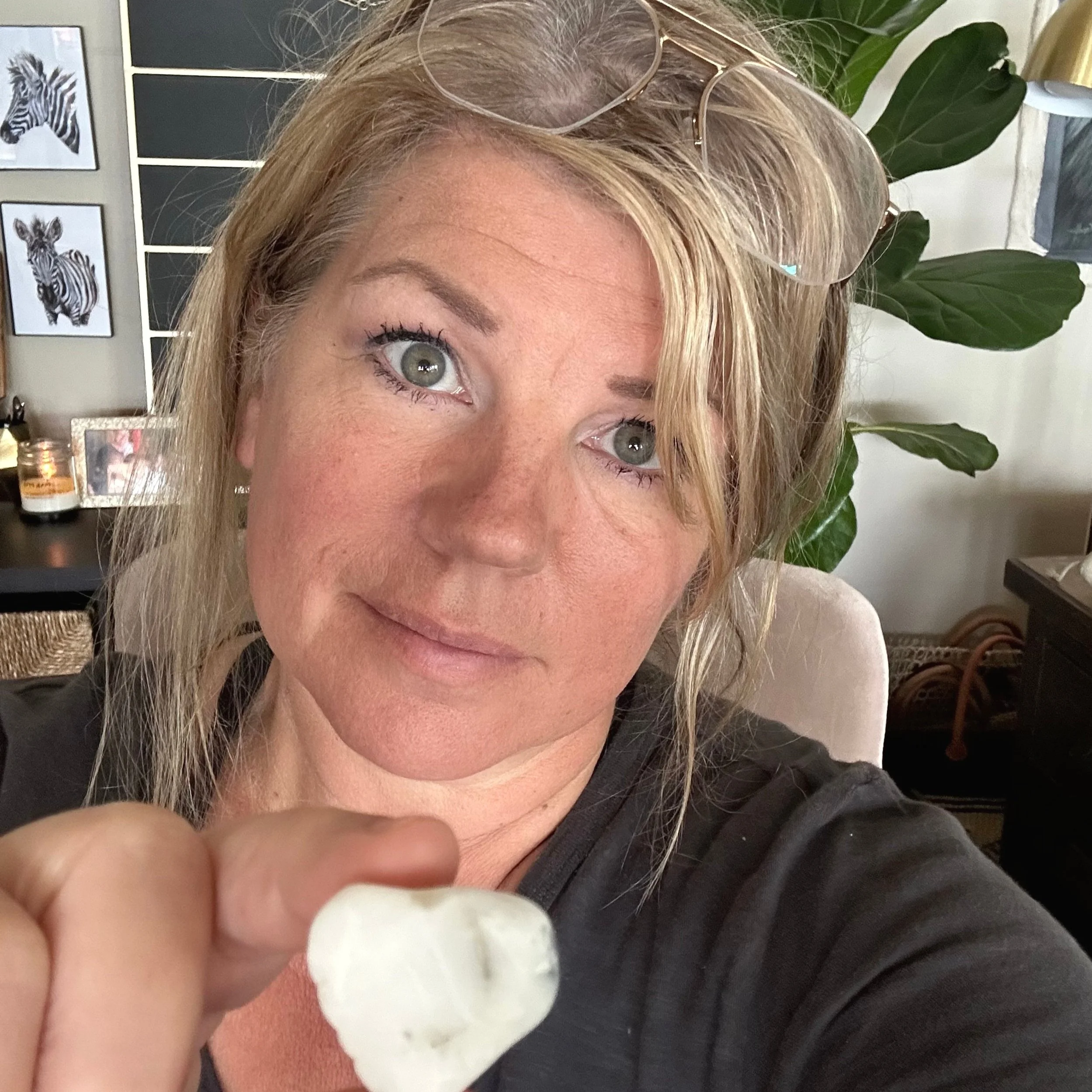
Recently I heard that the loss of a love is like a rock. We can stick it in our pocket, we can hold it up to view it, we can stick it in a bag we are carrying, we can hold it to our heart… but we are carrying it from now until forever. HOW we carry it can change, where we carry it can change, how we and when we choose to. look at it may change. But the weight and size of it won’t diminish. But, in carrying that rock, we will develop new techniques, muscles, and balance. We will learn, we will adapt.
One of the best parts of walking through grief with someone is finding the beautifully bittersweet ways of allowing, honoring and working through the hard spaces of adjusting to this added weight of grief. This is where we find hope.
Hope is not sticking a bandaid of words or ideas over pain, it is in hearing, feeling, sharing, and processing stories, memories, and current grief impact on our hearts, minds, bodies and relationships. Grief isn’t about letting go but about carrying it with. That idea has some discomfort that comes with because who wants to feel loss forever, and it brings a sense of relief with permission to be vulnerably raw about the truth of what you are feeling today.
I’m rooting for you in the space of this. I’m praying God is meeting you right where you are, showing you it is okay, all the feelings. He is not disappointed, or distant, he is ever-presently in this with you. Just as you are. And maybe the hardest part is feeling that or believing it. But I pray you do. I pray you know that you know, that God has never walked away, or taken his eyes off of you, he has been holding you all along. All you need to do right now is find ways to rest in that truth.
If you would like to book an appointment with me to discover some ways to move through your grief, you can set up a consult appointment here.